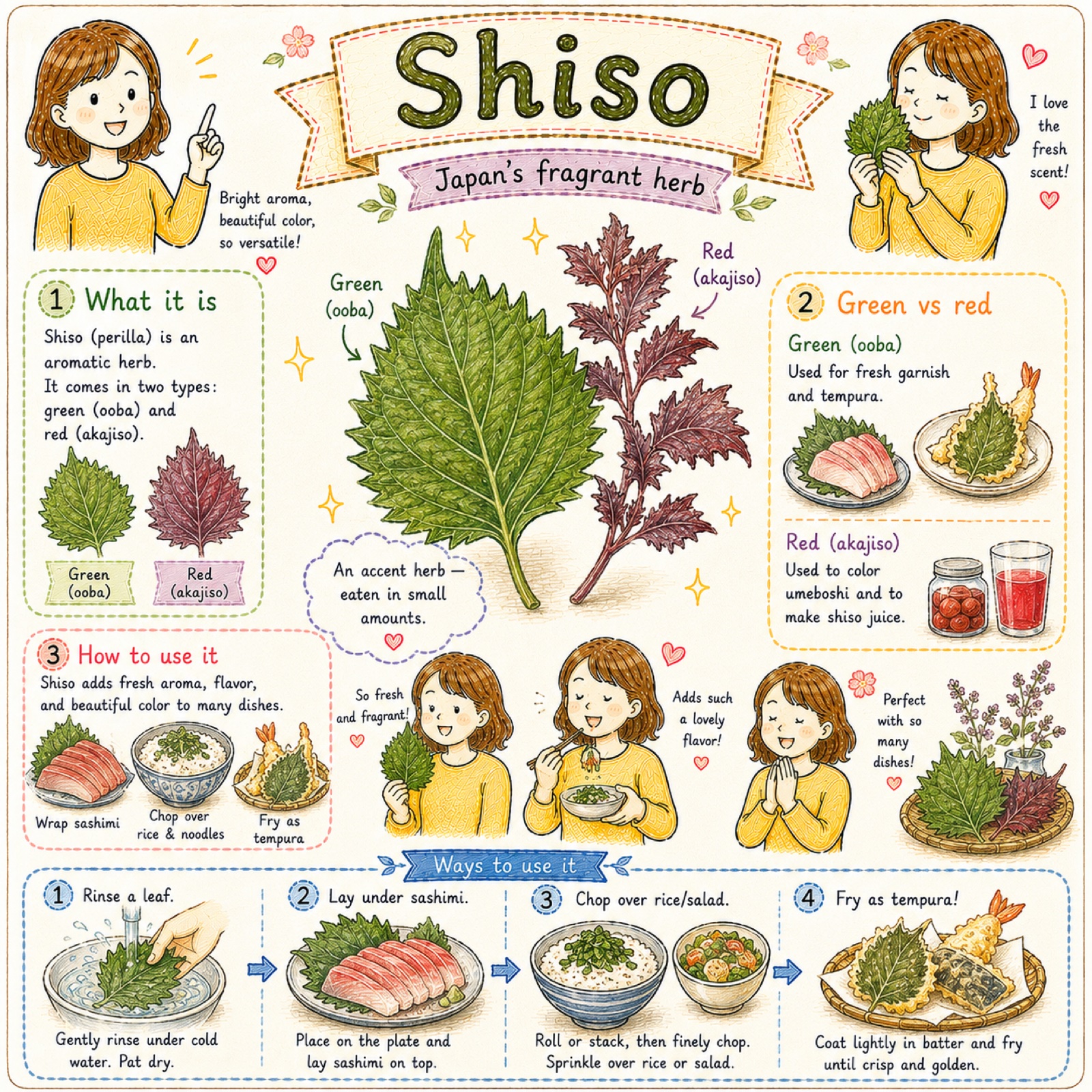
Lift the lid on a tray of sashimi in Japan and you’ll often spot a single, jagged-edged green leaf tucked beside the fish. That’s shiso — one of the country’s most beloved herbs, with a fragrance somewhere between mint, basil, and citrus that’s unlike anything else. It comes in two colors, flavors countless dishes, and even gives umeboshi its famous red blush. This guide explains what shiso is, the difference between green and red, and all the delicious ways to cook with it.
Why Shiso Is Loved
Shiso (紫蘇) is a member of the mint family and counts among Japan’s most cherished culinary herbs, prized for a bright, complex aroma that wakes up a dish in an instant.
- A fragrance like nothing else. Shiso carries hints of mint, basil, anise, and lemon all at once, which is why even a single leaf can transform a plate of sashimi, a bowl of rice, or a glass of cold tea.
- Beautifully versatile. From a crisp tempura leaf to finely shredded ribbons over noodles, shiso slips into both delicate and hearty cooking with ease.
- Contains vitamins and minerals. Shiso leaves contain beta-carotene along with B vitamins, vitamins E and K, and minerals such as calcium.
One honest note: shiso is an aromatic herb, not a vegetable you eat by the bowlful. It’s used in small amounts — a leaf or two as a garnish, a sprinkle of shredded leaves as seasoning — to lend fragrance and color. Think of it the way you’d think of basil or mint: a flavoring that brightens a dish rather than a main ingredient, and best enjoyed as part of a balanced diet.
The Types of Shiso
Shiso comes in two main colors, and they’re used in completely different ways. Green shiso (aojiso, also sold as ooba / 大葉) is the tender, fresh leaf you eat raw or lightly cooked. Red shiso (akajiso / 赤紫蘇) is more bitter and tougher, and is used mostly to color and flavor pickles and drinks rather than eaten fresh. Here’s how the two compare.
| Type | Color | Flavor | Typical uses | Notes |
|---|---|---|---|---|
| Green shiso aojiso / ooba (大葉) |
Bright green | Fresh and aromatic — mint, basil, anise, and lemon, with a mild peppery edge | Sashimi garnish and wraps, tempura, shredded over rice, noodles, salads, and pasta | The tender leaf eaten fresh; helps mask the smell of raw seafood |
| Red shiso akajiso (赤紫蘇) |
Purple-red | More bitter and earthy; too sharp to enjoy raw | Coloring umeboshi and pickles, making pink shiso juice and yukari rice seasoning | Salted for its purple pigment (anthocyanin); valued for color more than fresh eating |
Sources: Just One Cookbook (Shiso / Red Shiso Juice); Specialty Produce (Green Ooba Leaves); Food Republic; Tokyo Weekender.
What Is Shiso, and How Is It Used?
Shiso is a leafy annual herb grown across Japan, harvested leaf by leaf through the warm months. The two colors take very different paths in the kitchen.
Green shiso (ooba) is treasured for its fresh leaf. It’s the herb wrapped around or laid beside raw fish, fried into tempura, and shredded over rice and noodles. Its leaves also naturally help mask the smell of raw seafood, which is part of why it pairs so well with sashimi.
Red shiso (akajiso) is too bitter to enjoy raw, so it’s salted and put to work for its deep purple-red pigment (an anthocyanin). Layered with salted ume fruit during pickling, it turns umeboshi from drab yellow-green to their signature ruby red. The same leaves are simmered into a vivid pink shiso juice and dried into yukari, a tangy rice seasoning.
How to Cook With Shiso
This is where shiso really shines. Most everyday cooking uses green shiso (ooba), while red shiso (akajiso) has its own special jobs.
- As a sashimi garnish or wrap. The classic use. A green shiso leaf laid beside sashimi adds fragrance and a fresh, peppery bite — and you can wrap a slice of fish in it before eating.
- Fried into tempura. A whole green shiso leaf dipped in light batter and fried turns crisp and intensely aromatic. It’s one of the easiest ways to fall in love with the herb.
- Wrapped around foods. Shiso wraps beautifully around grilled meat, fish, or even cheese, and it’s a favorite tucked inside rolls and folded into ground-meat patties for fragrance.
- Chopped into rice, pasta, and salads. Shred green shiso into fine ribbons and scatter it over hot rice, cold somen noodles, salads, or a simple oil-and-garlic pasta for an instant lift. It’s wonderful stirred into chilled tofu, too.
- Red shiso for pickles. Salted and massaged to release its color, akajiso is the secret behind umeboshi’s red hue and is used to tint and flavor other Japanese pickles.
- Red shiso juice. Simmer the red leaves, then add a splash of something acidic like lemon or vinegar, and the liquid blooms into a brilliant pink, sweet-tart drink that’s a Japanese summer tradition — lovely over ice or topped with sparkling water.
A simple tip: green shiso bruises and wilts fast once cut, so shred it just before serving to keep its fragrance and color at their best.
How to Choose and Store Shiso
- Pick fresh, lively leaves. Choose green shiso (ooba) with vivid, even color and crisp, unblemished leaves; avoid any that look wilted, yellowing, or spotted.
- Know which color you need. Buy green shiso for fresh eating, garnishing, and tempura, and red shiso when you want to make pickles or shiso juice (it appears mainly in early summer).
- Store it gently. Wrap green shiso in a slightly damp paper towel, keep it in a container or bag in the fridge, and use it within a few days. Standing the stems in a little water also helps the leaves stay perky.
Frequently Asked Questions
What’s the difference between green and red shiso?
Green shiso (aojiso / ooba) is the milder, tender leaf eaten fresh — as a sashimi garnish, in tempura, or shredded over dishes. Red shiso (akajiso) is more bitter and tough, so instead of being eaten raw it’s salted and used for its purple-red color in umeboshi, pickles, and shiso juice.
Is perilla the same as shiso?
Yes. “Perilla” is the English name for the plant (Perilla frutescens), while “shiso” is its Japanese name. You may also see green shiso labeled “green perilla” or “ooba,” and red shiso as “red perilla” or “akajiso.”
What does shiso taste like?
Green shiso has a fresh, complex aroma with notes of mint, basil, anise, and lemon and a slightly peppery edge. Red shiso is more bitter and earthy, which is why it’s used more for color than eaten on its own.
Does red shiso really make umeboshi red?
Yes. Red shiso leaves carry a purple pigment (anthocyanin) that’s released when they’re salted and layered with the plums, turning umeboshi their characteristic deep red.
Can I use shiso like other herbs in non-Japanese cooking?
Absolutely. Green shiso works much like basil or mint — try it in salads, wraps, spring rolls, pasta, or chilled drinks. Just add it near the end, since its fragrance fades when it’s cut and cooked for a long time.
A Little Leaf With a Big Personality
Shiso is one of those flavors that, once you know it, you start noticing everywhere — the green leaf beside the sashimi, the red blush in a pickled plum, the bright pink glass of summer juice. Pick up a bundle of ooba, lay a leaf beside your next plate of fish or shred some over a bowl of rice, and you’ll see why this fragrant little herb has earned such a beloved place at the Japanese table.
About the author
KOBUO is the creator of Kobuo’s Japan Guide, sharing authentic Japanese food, traditions, and crafts with curious readers around the world. Every guide is carefully researched and paired with an original hand-drawn illustration. More about Kobuo →