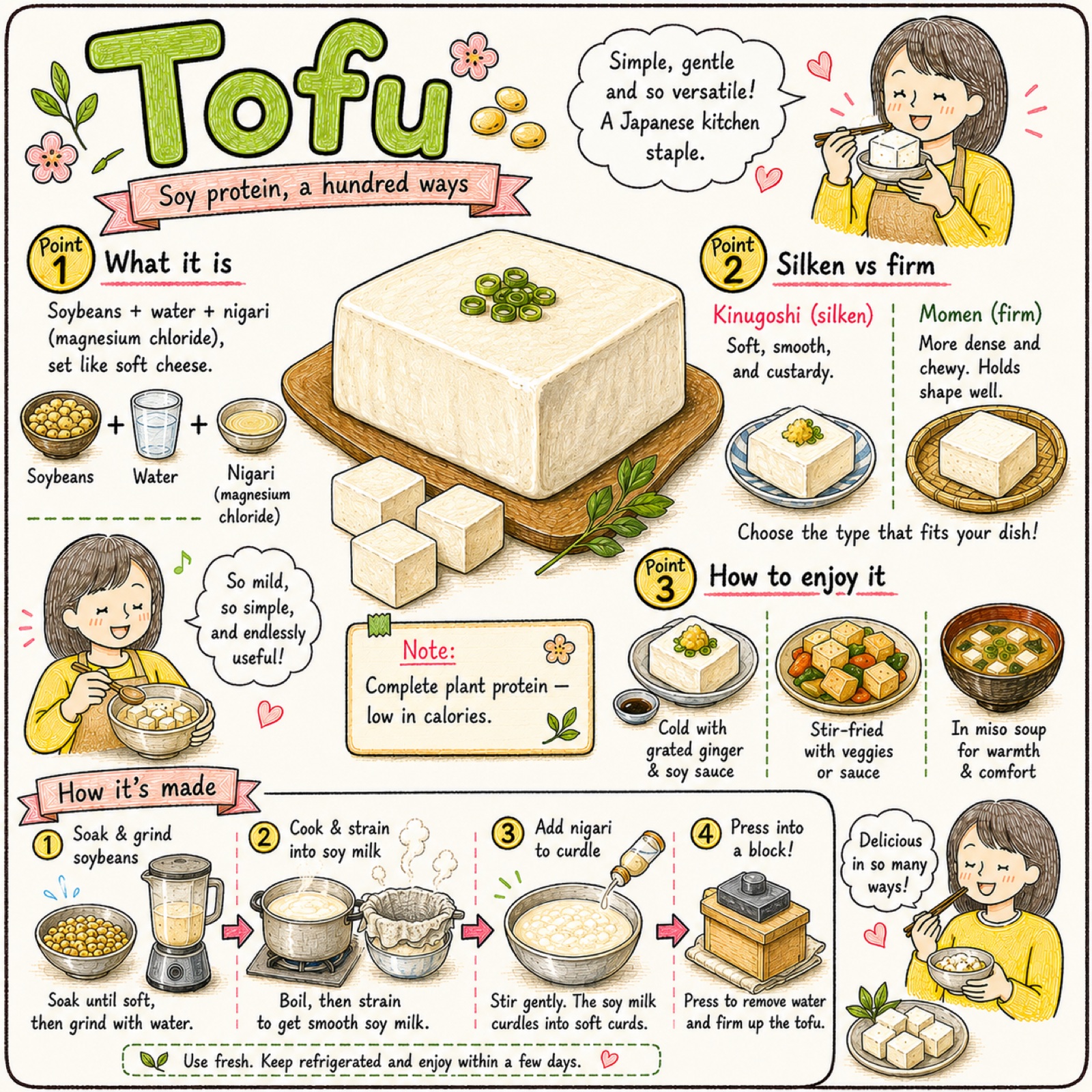
Tofu is one of those foods that quietly does everything. Made from nothing more than soybeans and water, it can be silky enough to spoon straight from the tub or firm enough to grill, and it slips into soups, stir-fries, salads, and even desserts. In Japan it’s been a kitchen staple for centuries — a humble, protein-rich block once nicknamed “meat from the fields.” This guide explains what tofu is loved for, the main types and how they differ, how it’s made, and plenty of ways to actually cook with it.
Why Tofu Is Loved as a Health Food
Tofu has fed Japan for centuries, prized as much for sustenance as for how easily it fits into any meal.
- A good source of plant protein. Tofu is rich in protein and provides all nine essential amino acids, which makes it a complete protein — unusual for a plant food, and a big reason it’s a staple for vegetarians and vegans.
- Light on calories and fat. For all that protein, tofu is naturally low in calories and saturated fat, and it contains no cholesterol.
- Contains calcium, iron, and isoflavones. Tofu made with a calcium-based coagulant can be a meaningful source of calcium, and it also provides iron, magnesium, and soy isoflavones — the plant compounds found in soy foods.
One honest note on soy: tofu contains compounds that, in very large amounts, may affect thyroid function — particularly for people whose iodine intake is low or who already have a thyroid condition. For most people with normal thyroid function, typical dietary amounts of tofu are not a concern. If you have a thyroid condition (or a soy allergy, since tofu is a soy product), it’s worth talking to your doctor. As with any food, enjoy tofu as part of a balanced diet.
The Main Types of Tofu
Plain tofu mostly comes down to how much water is left in it: the more the curds are pressed, the firmer and denser the block. From there, frying and freezing create a whole family of related products. Here’s how the common ones compare.
| Type | Texture & water | How it’s made | Best for |
|---|---|---|---|
| Silken (kinugoshi) | Soft, smooth, high moisture | Soy milk set in its container, not pressed | Cold dishes, soups, blending, desserts |
| Firm (momen) | Denser, lower moisture | Curds pressed in a cloth-lined mold | Frying, grilling, stir-fries, hot pot |
| Extra-firm | Very dense, least water | Pressed longer to remove more water | Crisp pan-frying, skewers, robust stir-fries |
| Atsuage | Fried skin, soft inside | Thick block of tofu, gently deep-fried | Grilling, simmering, topping with ginger & soy |
| Aburaage | Thin, porous pouch | Thin slices of firm tofu, twice deep-fried | Inari sushi, soups, stews, rice dishes |
| Koya-dofu | Dry, light, spongy | Tofu freeze-dried into a shelf-stable block | Rehydrating in broth; simmered dishes |
Note: firm (momen) tofu is generally higher in protein, calcium, and iron, while silken (kinugoshi) is lower in calories. Sources: Nippon.com, Japan-Guide, JustHungry.
What Is Tofu, and How Is It Made?
Tofu is essentially cheese made from soy milk instead of dairy. The process is simple and old:
- Soak and grind dried soybeans with water into a smooth purée.
- Cook and strain the purée to separate the liquid soy milk from the pulp (okara).
- Add a coagulant — traditionally nigari (a mineral-rich sea-salt extract) or a calcium salt — to the warm soy milk, which makes it curdle, just like setting cheese.
- Set the curds. For firm (momen) tofu, the curds are ladled into a cloth-lined mold and pressed to push out water; for silken (kinugoshi) tofu, the soy milk is set directly in its container and never pressed, so it stays soft and custardy.
The coagulant matters: nigari gives a clean, delicate flavor with a subtle mineral edge, while calcium salts boost the calcium content and yield a milder, creamier curd.
How to Cook With Tofu
Tofu’s mild flavor is the whole point — it soaks up whatever you season it with. Match the type to the job and it’s endlessly useful:
- Keep silken tofu soft and simple. Spoon cold silken tofu (hiyayakko) with soy sauce, grated ginger, scallions, and bonito flakes for a two-minute side dish. Slip cubes into miso soup at the end, or blend silken tofu into smoothies, dressings, and dairy-free desserts for instant creaminess.
- Press firm tofu before you cook it. Wrap firm or extra-firm tofu in a towel and weigh it down for 15–30 minutes to squeeze out water. It’ll brown better and hold its shape when you pan-fry, grill, or stir-fry it.
- Stir-fry, grill, or simmer the firm kinds. Cubed firm tofu crisps up in a hot pan, soaks up the sauce in a stir-fry, and holds together in simmered dishes and hot pots. A dusting of cornstarch before frying gives a golden, crisp edge.
- Make a gentle hot pot (yudofu). Simmer blocks of tofu in a light kombu broth and dip them in soy-based sauce — a classic, comforting Kyoto-style dish for cold weather.
- Reach for the fried and freeze-dried kinds. Atsuage (thick fried tofu) is great grilled or simmered; aburaage (thin fried pouches) can be stuffed with sushi rice for inari; koya-dofu (freeze-dried tofu) rehydrates into a spongy block that drinks up broth.
A simple rule: the softer the tofu, the less you should handle it — save silken for raw or barely-cooked dishes, and firm for anything that goes in a hot pan.
How to Choose and Store Tofu
- Pick the type for the dish. Choose silken for cold dishes, soups, and blending; firm or extra-firm for frying, grilling, and stir-fries. Medium tofu is a flexible middle ground.
- Check the coagulant for calcium. If you want the calcium boost, look for tofu set with calcium sulfate on the label; for traditional flavor, look for nigari.
- Store it cold and submerged. Keep opened fresh tofu in the fridge covered with cold water in an airtight container, change the water daily, and use it within 3–5 days. Freeze-dried koya-dofu keeps for months in the pantry. You can also freeze regular tofu — it turns chewier and spongier, which some people love for soaking up sauce.
Frequently Asked Questions
Is tofu good for you?
Tofu is a low-calorie, cholesterol-free source of complete plant protein, and it provides calcium, iron, magnesium, and soy isoflavones. The main thing to keep in mind is that very large amounts of soy may affect thyroid function in some people, so anyone with a thyroid condition or soy allergy should check with a doctor. Enjoyed in normal amounts as part of a balanced diet, tofu is a nutritious everyday food.
What’s the difference between silken and firm tofu?
Silken (kinugoshi) tofu is set directly in its container and never pressed, so it’s soft, smooth, and custardy — best for cold dishes, soups, and blending. Firm (momen) tofu has the curds pressed to remove water, making it denser and higher in protein, calcium, and iron — best for frying, grilling, and stir-frying.
Do I need to press tofu before cooking?
Press firm and extra-firm tofu if you want it to brown and hold its shape — wrap it in a towel and weigh it down for 15–30 minutes. You don’t press silken tofu; it’s too delicate and is meant to stay soft.
Is tofu safe for people with thyroid problems?
For people with normal thyroid function, typical dietary amounts of tofu are generally not a concern. Because soy contains compounds that may affect the thyroid in large amounts — especially when iodine intake is low — anyone with a thyroid condition should talk to their doctor about how much soy is right for them.
How long does tofu last once opened?
Fresh tofu keeps about 3–5 days in the fridge if you store it submerged in cold water in an airtight container and change the water daily. Freeze-dried koya-dofu lasts for months in the cupboard, and you can freeze fresh tofu for a chewier texture.
A Humble Block That Does It All
Few foods are as quietly versatile as tofu. The same plain block can be a silky spoonful with ginger and soy sauce, a crisp-edged cube in a stir-fry, or a creamy base for a dairy-free dessert — all while delivering complete plant protein for very few calories. Keep a tub in the fridge, match the texture to what you’re making, and you’ll see why this “meat from the fields” has stayed on the Japanese table for centuries.
About the author
KOBUO is the creator of Kobuo’s Japan Guide, sharing authentic Japanese food, traditions, and crafts with curious readers around the world. Every guide is carefully researched and paired with an original hand-drawn illustration. More about Kobuo →