Few foods divide first-timers like natto. Sticky, stringy, and pungently funky, these fermented soybeans are the breakfast many visitors are dared to try — and the one a huge number of Japanese people eat happily every single day. Behind the smell is one of the most nutrient-dense traditional foods in Japan. This guide explains what natto is loved for, how it’s made, and — crucially — how to eat it so you actually enjoy it.
Why Natto Is Loved as a Health Food
Natto has a reputation in Japan as a humble, satisfying everyday food, and its nutrition backs that up.
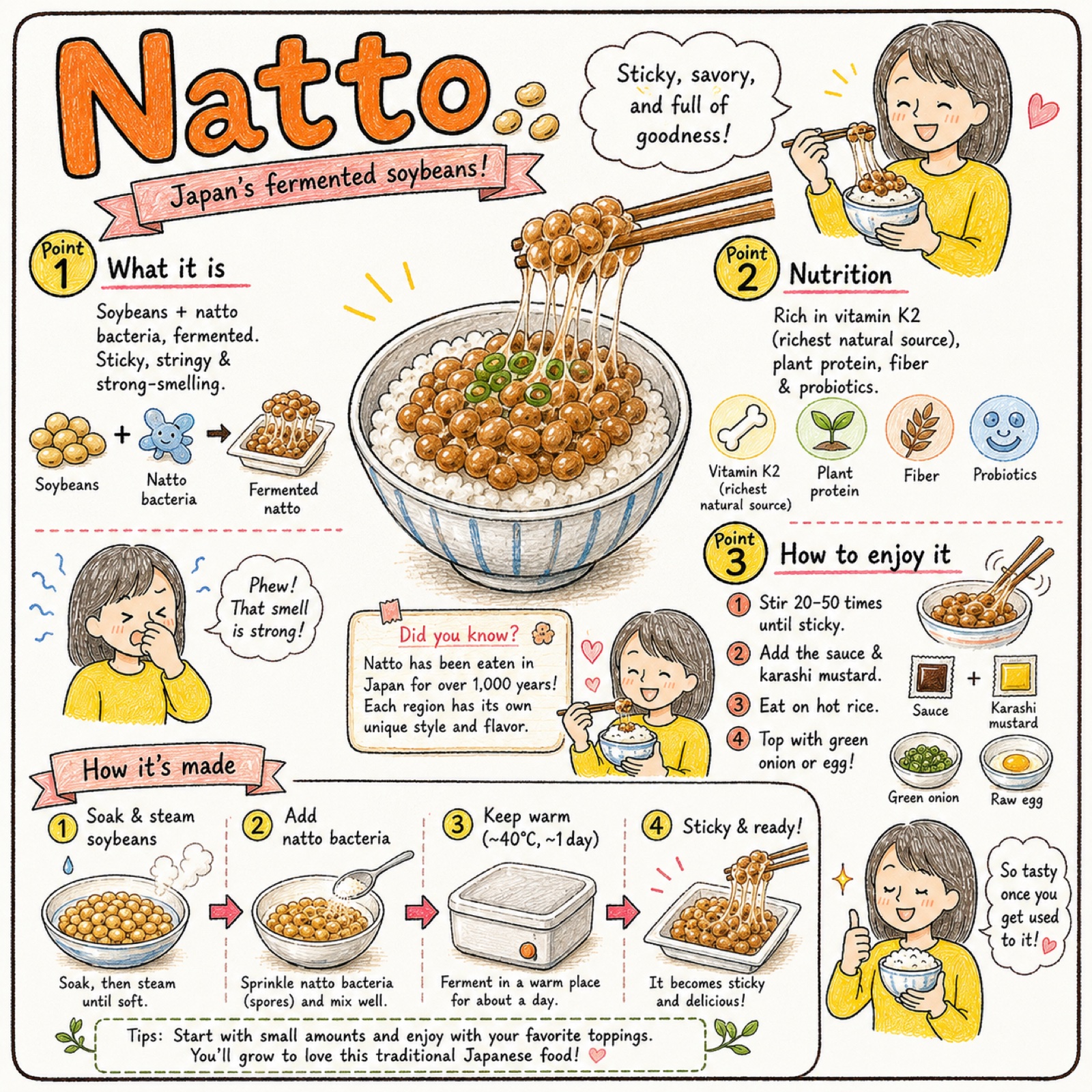
- Exceptionally rich in vitamin K2. Natto is the single richest natural source of vitamin K2 (in the MK-7 form) of any common food — by a wide margin. Vitamin K2 is best known for its role in supporting bone health.
- Contains nattokinase. Fermentation produces nattokinase, an enzyme first identified in natto that has been the subject of scientific research, though the evidence is still preliminary. (Note: nattokinase breaks down with heat (well below boiling), so natto is eaten unheated if this is your interest.)
- A living probiotic food. Natto is made with Bacillus subtilis, a hardy, spore-forming bacterium that survives stomach acid well — plus it’s high in plant protein and fiber.
An important safety note: because natto is extremely high in vitamin K, it can interfere with blood-thinning medication such as warfarin. If you take an anticoagulant, talk to your doctor before adding natto to your diet. As with any food, natto is best enjoyed as part of a balanced diet rather than treated as a medicine.
| Nutrient | Per serving / note |
|---|---|
| Protein | ~8 g |
| Fiber | ~3 g |
| Vitamin K2 (MK-7) | Very high — natto is the richest natural source |
| Probiotics | Live Bacillus subtilis |
| Nattokinase | Present (enzyme from fermentation) |
| Calories | ~100 kcal |
Values are typical and vary by product. Sources: USDA FoodData Central; published analyses of natto vitamin K2 (MK-7) content. Natto is very high in vitamin K — see the safety note above if you take blood-thinning medication.
What Is Natto, and How Is It Made?
Natto is made from soybeans and a single helper: the bacterium Bacillus subtilis var. natto. The process is simple but precise:
- Soak and steam the soybeans until soft.
- Add the natto bacteria and keep the beans warm (around 40°C) for about a day.
- As the bacteria ferment, they produce natto’s signature sticky, stringy threads (neba-neba) and its strong aroma.
- The natto is then rested and chilled to develop flavor before eating.
That long fermentation is exactly what creates the vitamin K2, the nattokinase, and the famous stickiness.
The Smell, the Stickiness — and How to Enjoy It
Let’s be honest: natto smells strong and looks slimy. But there’s a reason millions love it, and a few simple tricks make it much easier to enjoy:
- Stir it first. Whip the natto with chopsticks for 20–50 stirs before adding anything. This develops the sticky threads and actually mellows the flavor.
- Add the sauce and mustard. Most packs come with a little soy-based tare sauce and hot karashi mustard — both tame the funk and add savory depth.
- Put it on hot rice. The classic way. The warm rice softens the smell and turns it into a satisfying, savory bite.
- Top it your way. Chopped green onion, a raw or soft egg, shredded nori, or a dash of soy sauce all help. Many beginners find natto far easier this way.
If the smell is a hurdle, start with a small-bean variety on plenty of rice, well mixed, with the sauce and mustard. It’s milder than it first appears.
How to Choose and Where to Buy Natto
- Bean size. Small-bean natto is mild and popular; large-bean is chewier and more robust; hikiwari (chopped beans) is softer and a good entry point.
- Where to find it. Outside Japan, natto is usually sold frozen at Japanese and Asian grocery stores. It freezes and thaws well, so it’s easy to keep a stock.
- Check the kit. Most packs include the sauce and mustard sachets — handy for first-timers.
Frequently Asked Questions
Is natto good for you?
Natto is a traditional fermented food that’s high in protein and fiber and is the richest natural source of vitamin K2 (MK-7). It also contains the enzyme nattokinase and live Bacillus subtilis. That said, it’s very high in vitamin K, so anyone on blood-thinning medication like warfarin should check with a doctor first.
Why does natto smell so strong?
The smell comes from fermentation by Bacillus subtilis. It’s the same process that creates natto’s nutrients and stickiness. Stirring it well and eating it on warm rice with the sauce and mustard noticeably softens both the smell and the taste.
Is natto an acquired taste?
For many people, yes — but plenty of first-timers enjoy it right away, especially when it’s well stirred and served on rice with the included sauce and mustard. Starting with a milder small-bean or hikiwari type helps.
Can you cook natto?
You can, and it’s delicious in fried rice, omelets, and pasta — but heat with heat (well below boiling) breaks down the nattokinase. If you’re eating natto specifically for nattokinase, keep it unheated on rice.
How do you store natto?
Keep it refrigerated and eat by the date on the pack, or store it in the freezer for longer. Thaw it in the fridge before eating.
A Funky Little Favorite
Natto asks for a little open-mindedness — but it rewards it. Once you’ve stirred a pack into glossy threads, spooned it over hot rice, and added the sauce and a dab of mustard, that first daunting smell turns into something genuinely moreish. It’s cheap, traditional, and remarkably satisfying — no wonder so many people in Japan reach for it every morning.
About the author
KOBUO is the creator of Kobuo’s Japan Guide, sharing authentic Japanese food, traditions, and crafts with curious readers around the world. Every guide is carefully researched and paired with an original hand-drawn illustration. More about Kobuo →