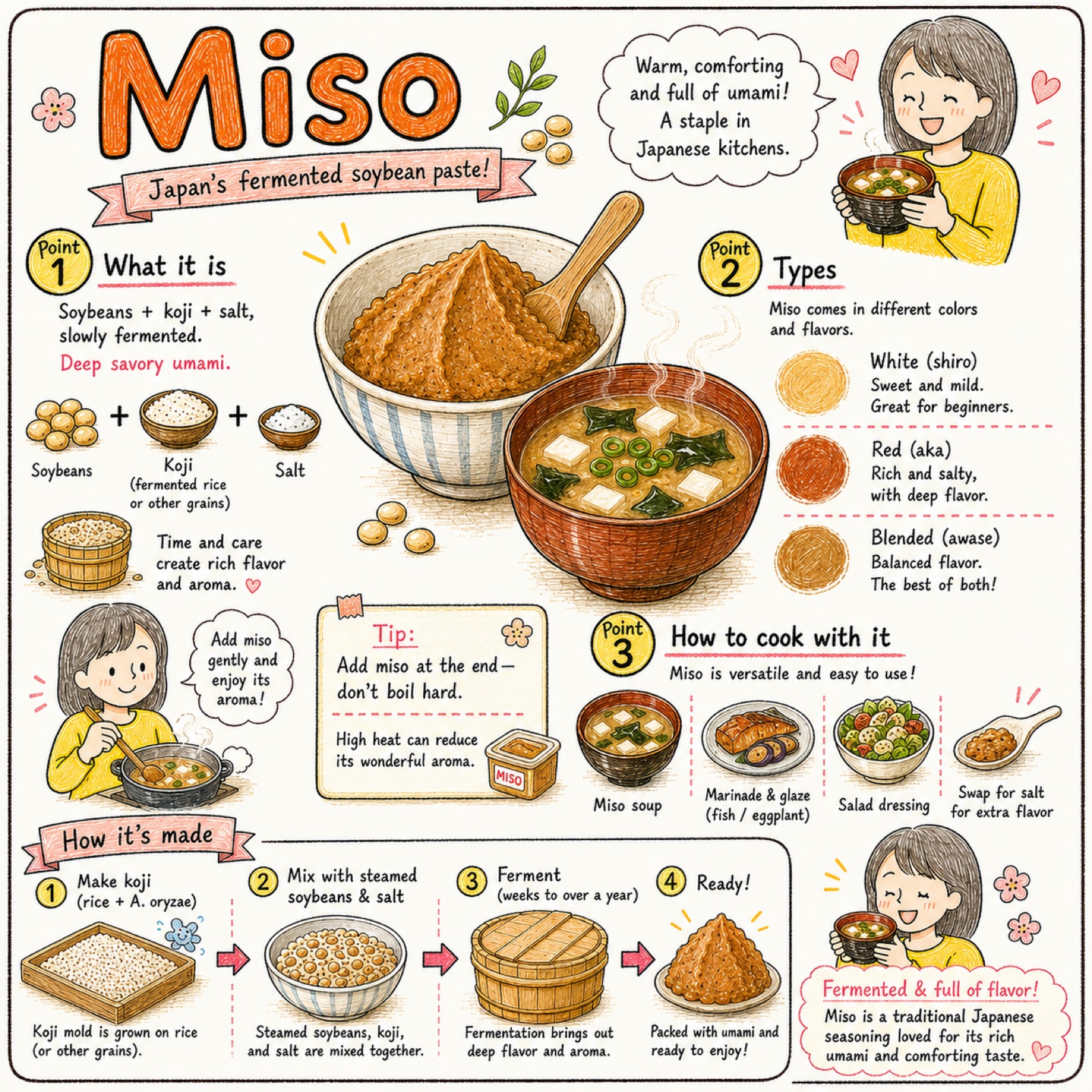
Miso is the savory, umami-rich soul of Japanese home cooking. This fermented paste of soybeans, salt, and koji turns up in everything from a morning bowl of miso soup to glazes, marinades, and dressings — and a little goes a long way. This guide explains what miso is loved for, the main types and how they differ, how it’s made, and — since miso is above all a seasoning — plenty of ways to actually cook with it.
Why Miso Is Loved as a Traditional Health Food
Miso has been a staple of the Japanese table for centuries, valued as much for sustenance as for flavor.
- A fermented, probiotic food. Miso is made with koji (the mold Aspergillus oryzae), and the fermentation creates beneficial microbes traditionally associated with gut health.
- Plant protein and more. Made from soybeans, miso provides plant protein and the soy compounds (isoflavones) found in other soy foods — and fermentation makes its nutrients easier to absorb.
- Deep umami from a simple base. At heart, miso is just soybeans, salt, and koji, slowly fermented into a paste packed with savory depth.
One honest note on salt: miso is high in salt, so it’s best used in moderation as a seasoning rather than eaten in large amounts. A spoonful flavors a whole bowl or dish, which is exactly how it’s meant to be used. As with any food, enjoy it as part of a balanced diet.
The Main Types of Miso
Miso varies in two big ways: the koji it’s made with (rice, barley, or soybean) and its color, which deepens with longer fermentation. As a rule of thumb, the lighter the miso, the sweeter and milder; the darker, the saltier and more intense.
| Type | Color | Fermentation | Flavor | Salt | Best for |
|---|---|---|---|---|---|
| White (shiro) | Pale | Short | Sweet, mild | Lower | Delicate soups, dressings, sweets |
| Red (aka) | Dark red-brown | Long (a year+) | Rich, intense | Higher | Hearty soups, braises, marinades |
| Blended (awase) | Medium | Mixed | Balanced | Medium | All-purpose, everyday |
Miso is also classified by its koji: rice miso (the most common, ~80% in Japan), barley miso, and soybean miso. Sources: Just One Cookbook; Wikipedia, “Miso”; Journal of Food Science (koji & miso review).
What Is Miso, and How Is It Made?
Miso starts with koji — a grain (usually rice or barley) or soybeans cultured with the mold Aspergillus oryzae. The koji is then combined with steamed soybeans and salt, packed into vats, and left to ferment.
- Make the koji by culturing rice, barley, or soybeans with A. oryzae.
- Mash steamed soybeans and mix them with the koji and salt.
- Ferment for anywhere from a few weeks (sweet white miso) to a year or more (dark red miso).
- As it ages, the paste darkens, the saltiness deepens, and the umami grows richer.
That koji fermentation is what gives miso its complex, savory flavor — and the longer it ferments, the bolder it gets.
How to Cook With Miso
Miso is a seasoning first and foremost, so this is where it shines. A few simple principles unlock dozens of dishes:
- Make miso soup the right way. Heat dashi (or stock), turn the heat to low, then dissolve the miso in a ladleful of the warm liquid before stirring it back in. Don’t let miso soup boil hard — high heat dulls its aroma and kills the beneficial microbes. Add it at the very end.
- Use it as a marinade or glaze. Mix miso with a little mirin, sake, and sugar to marinate fish (the classic saikyo-yaki), chicken, or tofu, or to glaze eggplant (nasu dengaku). The miso caramelizes beautifully under heat.
- Whisk it into dressings and sauces. Miso, rice vinegar, sesame oil, and a touch of honey make a quick dressing for salads or steamed vegetables. It’s also great in a creamy dip.
- Swap it for salt. Use miso in place of some of the salt in soups, stews, braises, and even some baked goods — blend it into the wet ingredients so it spreads evenly. It adds salt and savory depth.
- Go beyond soup. Miso ramen, miso-glazed roasted vegetables, miso butter for corn or pasta, and even miso in caramel and cookies all show off its umami.
The golden rule: add miso toward the end of cooking and avoid a hard boil, so you keep its aroma and character.
How to Choose and Store Miso
- Pick your color for the dish. Reach for white (shiro) miso for delicate soups, dressings, and sweets; red (aka) miso for hearty soups, braises, and marinades; blended (awase) miso as an all-purpose everyday choice.
- Check the ingredients. The simplest miso lists just soybeans, koji, and salt. Some products add dashi or alcohol (to stop fermentation) — fine, but read the label if you want it plain.
- Store it cold. Keep miso in the fridge, pressed flat with the surface covered, and it will last for months. It naturally darkens a little over time, which is harmless.
Frequently Asked Questions
Is miso good for you?
Miso is a traditional fermented food that provides plant protein and fermentation-derived microbes traditionally linked with gut health. The main thing to keep in mind is salt — miso is high in sodium, so it’s best used in modest amounts as a seasoning, as part of a balanced diet.
What’s the difference between white and red miso?
White (shiro) miso is fermented for a shorter time with more koji, so it’s sweeter, milder, and less salty. Red (aka) miso is fermented longer, making it darker, saltier, and more intense. Blended (awase) miso combines the two for a balanced, all-purpose flavor.
Can you cook miso, or does heat ruin it?
You can absolutely cook with miso — marinades and glazes rely on heat. For miso soup, though, add it at the end and avoid a hard boil to preserve its aroma and beneficial microbes.
Which miso should a beginner buy?
A blended (awase) miso is the most versatile first choice — it works for soup, dressings, and marinades alike. If you mainly want gentle miso soup and dressings, start with white (shiro) miso.
How long does miso last?
Stored cold and well-covered, miso keeps for many months. It darkens slightly with age but remains safe to eat; just use a clean spoon each time.
The Paste That Flavors a Nation
Few ingredients do as much with so little as miso. A single spoonful turns water into soup, plain fish into a restaurant dish, and steamed vegetables into something craveable. Start with a versatile blended miso, keep it in the fridge, remember not to boil it hard — and you’ll find this humble fermented paste working its way into your cooking far beyond the soup bowl.
About the author
KOBUO is the creator of Kobuo’s Japan Guide, sharing authentic Japanese food, traditions, and crafts with curious readers around the world. Every guide is carefully researched and paired with an original hand-drawn illustration. More about Kobuo →