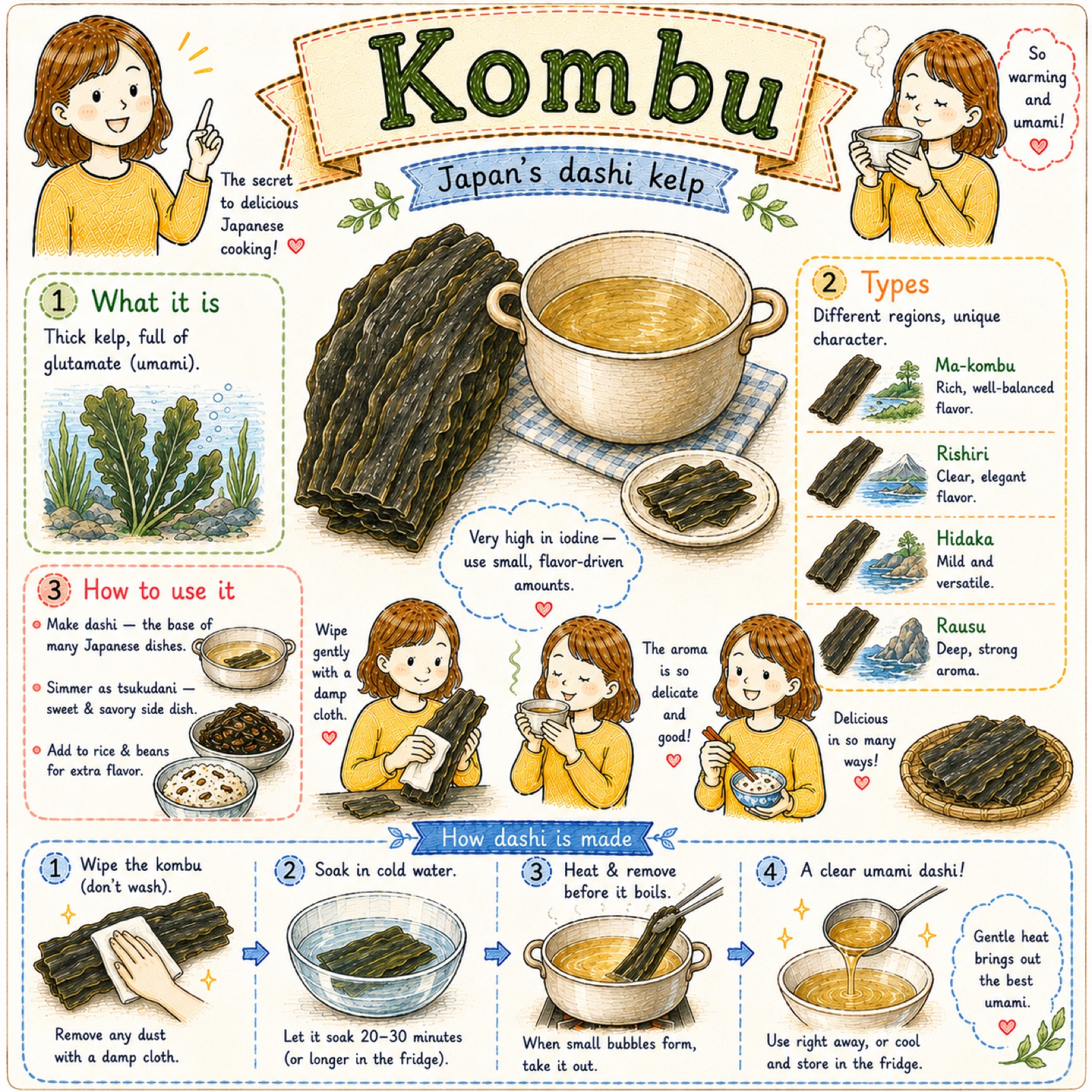
If Japanese cooking has a secret foundation, it’s kombu. This thick, leathery sheet of dried kelp rarely takes center stage, yet it quietly flavors a huge share of the country’s home cooking. Steep a strip in water and you’ve made dashi — the gentle, savory stock that sits beneath miso soup, simmered dishes, and countless sauces. This guide explains what kombu is loved for, the main culinary types, how dashi is made, and all the ways to put kombu to work in your kitchen.
Why Kombu Is Loved
Kombu has been harvested in the cold waters off Hokkaido for centuries, and it earned its place in the kitchen for one big reason: flavor.
- Exceptionally rich in glutamate and umami. Kombu is one of the most glutamate-rich foods there is. In fact, in 1908 the Japanese chemist Kikunae Ikeda identified glutamic acid as the source of kombu’s savory taste and named that taste umami — the “fifth taste.” That deep, rounded savoriness is exactly what a strip of kombu lends to a pot of water.
- The base of dashi. Dashi is the backbone of Japanese cuisine, and kombu is its starting point. A clear kombu stock adds body and depth without overpowering the other ingredients.
- A source of minerals. Like other sea vegetables, kombu naturally contains minerals, and it’s used in small, flavor-driven amounts rather than eaten in large quantities.
One honest note on iodine: kombu is naturally very high in iodine — in fact, it’s among the highest of all seaweeds, well above nori. Used in normal culinary amounts (a strip to make a pot of stock), that’s simply part of how it works. But because the iodine content is so high, anyone with a thyroid condition should be mindful of how much kombu they eat and check with their doctor. As with any food, enjoy kombu as part of a balanced diet.
The Types of Kombu
Most culinary kombu comes from closely related kelp of the genus Saccharina (much of it Saccharina japonica), grown along different stretches of the Hokkaido coast, and the variety names refer to where it’s harvested. The four you’ll see most often — ma-kombu, rishiri, hidaka, and rausu — each have their own character. Here’s how they compare.
| Type | Region | Character / flavor | Best use |
|---|---|---|---|
| Ma-kombu 真昆布 |
Southern Hokkaido (Hakodate area) | Premium and refined; clean, mildly sweet, with no off-notes | A clear, elegant dashi for refined dishes |
| Rishiri 利尻昆布 |
Northern Hokkaido (Rishiri / Rebun) | Sharp and slightly salty; yields a clear, sophisticated stock | A staple for clear dashi in Kyoto cuisine |
| Hidaka 日高昆布 (mitsuishi) |
Hidaka coast, southern Hokkaido | All-purpose and softer; cooks tender quickly | Everyday dashi and eaten in simmered dishes and tsukudani |
| Rausu 羅臼昆布 |
Rausu, eastern Hokkaido (Shiretoko) | Rich and full-bodied; deeply savory with a faint sweetness, slightly cloudy stock | A robust, full-flavored dashi |
Sources: Umami Information Center (Kombu/Kelp); Just One Cookbook (Kombu); Diversivore (Kombu); mai-rice.com (Kombu Types Compared); Sushi University (Types of Kombu).
What Is Kombu, and How Is It Used?
Kombu is dried kelp — large brown sea vegetables that grow in cold coastal waters. After harvesting, the kelp is dried and aged into the firm, dark sheets you find in the shop, often dusted with a pale powder (more on that below).
Its single most important use is dashi, the foundational Japanese stock. Making a basic dashi is simple:
- Wipe, don’t wash. Lightly wipe the surface of the kombu with a dry cloth; don’t scrub off the white powder, which is flavor.
- Soak. Place the kombu in a pot of cold water and let it steep for about 30 minutes.
- Heat gently. Warm the pot over medium heat and remove the kombu just before the water reaches a boil — boiling kombu can turn the stock cloudy and a little slimy.
- Finish (optional). For a classic awase dashi, turn off the heat and add a handful of katsuobushi (bonito flakes); let them steep a couple of minutes, then strain.
The result is a clear, savory stock ready for miso soup, noodle broths, and simmered dishes.
How to Use Kombu
Because kombu is thick and sturdy, it works in ways thin seaweeds can’t:
- Make dashi. Its number-one job — the savory base for soups, broths, and sauces.
- Simmer it into tsukudani. Don’t throw out the kombu after making dashi. Slice it and simmer it in soy sauce and mirin to make tsukudani, a sweet-savory relish for rice.
- Cure fish with kombu-jime. Pressing fresh fish (often white fish) between sheets of kombu, called kombu-jime, firms the flesh and infuses it with umami — a classic sushi and sashimi technique.
- Shave it into tororo or oboro kombu. Blocks of kombu are shaved into delicate, melt-in-the-mouth threads (tororo kombu) or thin sheets (oboro kombu), used to top rice, noodles, and soups.
- Add it to rice and beans. A small piece of kombu cooked with rice or simmered with beans adds gentle background savoriness.
- Steep it as kobucha. Infusing kombu in hot water makes kobucha, a savory kelp tea (not to be confused with the fermented “kombucha” drink).
How to Choose and Store Kombu
- The white powder is umami, not mold. Good kombu is often coated with a fine, pale-white powder called mannitol. It’s a natural sign of flavor, not spoilage — so don’t rinse it away.
- Look for thick, dark, well-dried sheets. Quality kombu is firm, deeply colored, and dry to the touch.
- Keep it dry. Kombu is shelf-stable when stored cool and dry. Keep it in an airtight bag or container away from humidity, and it will last a long time. If it absorbs moisture, dry it out before storing again.
Frequently Asked Questions
Is kombu high in iodine?
Yes — very. Kombu is among the highest-iodine seaweeds of all, well above nori. Used in normal culinary amounts (a strip to make stock), that’s just how it works, but anyone with a thyroid condition should be mindful of their intake and check with a doctor.
What’s the difference between kombu, wakame, and nori?
They’re all edible seaweeds used differently. Kombu is thick kelp used mainly to make dashi (stock); wakame is the soft, leafy seaweed in miso soup and salads; nori is pressed into thin sheets for sushi and snacks. Kombu is the highest in iodine of the three.
What is the white powder on kombu?
It’s a natural compound called mannitol that surfaces as the kelp dries, and it carries umami. It’s a good sign, not mold — wipe the sheet with a dry cloth rather than washing it.
Why shouldn’t you boil kombu?
Boiling kombu can make the stock cloudy and slightly slimy and can draw out bitter notes. For a clean, clear dashi, remove the kombu just before the water comes to a boil.
Can you eat the kombu after making dashi?
Absolutely. The softened kombu left over from dashi is perfect for tsukudani — slice it and simmer it in soy sauce and mirin for a tasty rice topping, so nothing goes to waste.
The Quiet Foundation of Japanese Flavor
Kombu rarely gets the spotlight, but it’s the reason so many Japanese dishes taste the way they do. From the clear stock beneath a bowl of miso soup to a sweet-savory pile of tsukudani on rice, this humble strip of kelp does an enormous amount of work. Keep a pack in a dry cupboard, steep a piece in water tonight, and you’ll taste the savory foundation that Japanese cooks have relied on for generations.
About the author
KOBUO is the creator of Kobuo’s Japan Guide, sharing authentic Japanese food, traditions, and crafts with curious readers around the world. Every guide is carefully researched and paired with an original hand-drawn illustration. More about Kobuo →