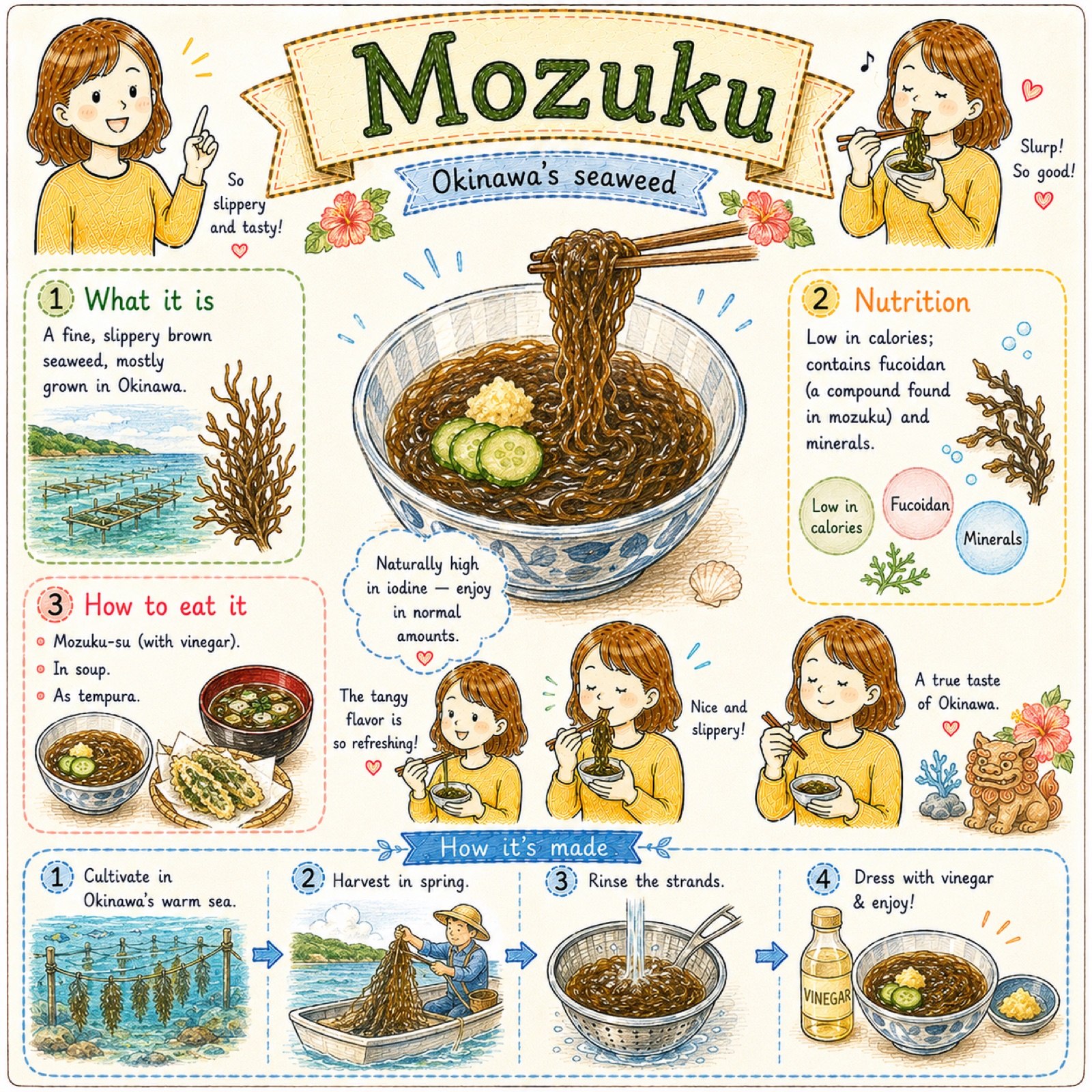
Slurp a spoonful of mozuku and you’ll understand it in an instant: fine, dark threads of seaweed in a pool of tangy vinegar, slipping and sliding off the spoon before you can quite catch them. This is one of Okinawa’s most beloved everyday foods — a slippery, refreshing sea vegetable that locals eat almost daily. If you’ve never met mozuku before, this guide explains what it is loved for, the types you’ll find, how it’s grown, and all the ways to enjoy it.
Why Mozuku Is Loved
Mozuku has quietly become a fixture on Okinawan tables, and a small cup of it delivers a lot of character for almost no calories.
- Very low in calories. Mozuku is mostly water and fiber, which makes a small serving light and refreshing — easy to add to a meal without weighing it down.
- Its signature slippery texture. The thing people remember most about mozuku is the slick, silky feel as it slides across the tongue. That slipperiness comes partly from a compound found in mozuku called fucoidan, a slippery substance naturally present in brown seaweeds.
- A source of minerals. Like other sea vegetables, mozuku contains minerals such as those found naturally in seawater, along with dietary fiber.
One honest note on iodine: seaweed is naturally high in iodine, and mozuku is no exception. Most people are perfectly fine with everyday amounts, but if you have a thyroid condition, it’s worth keeping an eye on how much seaweed you eat and checking with your doctor. As with any food, enjoy mozuku as part of a balanced, varied diet.
The Types of Mozuku
Not all mozuku is the same. “Mozuku” is actually a collective name for several fine brown seaweeds, but two types account for most of what you’ll see.
- Okinawa mozuku (Cladosiphon okamuranus) is the main type by far. Its strands are relatively thick and have a firm, satisfying bite. The overwhelming majority of Japan’s mozuku is this variety.
- Ito-mozuku (Nemacystus decipiens) is thinner, with finer threads and a more delicate, slippery mouthfeel.
There’s a short comparison table below to make the differences easy to see at a glance.
| Form | Character | Preparation | Best Use |
|---|---|---|---|
| Fresh (raw) | Best texture; clean, mild flavor. Shortest shelf life. | Rinse and use quickly; keep refrigerated. | Mozuku-su, soups, and tempura at their freshest |
| Salted | The most common form outside Okinawa; keeps far longer. | Rinse off the salt, then soak briefly to freshen. | All-purpose cooking — soups, noodles, and side dishes |
| Pre-seasoned (mozuku-su cup) | Mozuku already mixed with seasoned vinegar. No prep at all. | Peel the lid and eat — ready to serve. | A quick, refreshing chilled side dish |
Sources: Wikipedia (Mozuku), Just One Cookbook, Okinawa Institute of Science and Technology (OIST), Okinawa Labo.
What Is Mozuku, and How Is It Made?
Mozuku is a fine, slippery brown seaweed grown almost entirely in the warm, shallow waters around Okinawa — which produces the vast majority of all the mozuku eaten in Japan. Here’s how it goes from sea to table:
- Cultivate it in the sea. Most mozuku today is farmed, grown on nets set in shallow coastal waters around Okinawa’s islands.
- Harvest in spring. The seaweed is gathered when it matures, mainly in spring and early summer, when the thin strands are at their best.
- Wash and salt it. Fresh mozuku is rinsed and usually packed in salt to preserve it, since it doesn’t keep long on its own.
- Process into products. Much of the harvest is sent to factories and turned into the salted bags and ready-to-eat seasoned cups you’ll find in shops.
The result is a tangle of fine, dark green-brown threads with a clean, mild flavor and that unmistakable slippery texture.
How to Eat Mozuku
Mozuku is mild and slippery, so it shines when paired with a little acidity, salt, or savory broth. Here are the most popular ways to enjoy it.
- Mozuku-su — the classic. By far the most common way to eat it: mozuku served cold in seasoned rice vinegar (often a sweet-tangy vinegar like sanbaizu or black vinegar). It’s sold in small ready-to-eat cups and eaten as a refreshing side, especially in hot weather. This is the dish to try first.
- In miso soup or clear soup. Stir a handful into hot soup just before serving for an instant silky texture and a touch of the sea.
- Mozuku tempura. An Okinawan favorite — clumps of mozuku are bound in batter and deep-fried into crisp little fritters, a lovely contrast to its usual slipperiness.
- With grated yam or egg. Mozuku pairs beautifully with grated mountain yam (tororo) or a beaten raw or soft-cooked egg, layered over rice for a smooth, slippery bowl.
- In noodles. It’s tossed through chilled somen and other noodle dishes, adding texture and a fresh, briny note.
A handy tip: a splash of rice vinegar and a pinch of grated ginger is all most mozuku needs to taste great.
How to Choose and Store Mozuku
You’ll usually find mozuku in one of three forms, each suited to a different cook:
- Fresh (raw) mozuku. Sold loose or in vacuum packs, mainly in Okinawa and well-stocked Japanese groceries. It has the best texture but the shortest shelf life, so use it quickly and keep it refrigerated.
- Salted mozuku. The most common form outside Okinawa. It keeps far longer; just rinse and soak it to remove the salt before using. This is the most versatile option for cooking.
- Pre-seasoned mozuku-su cups. Small ready-to-eat tubs of mozuku already mixed with seasoned vinegar. There’s no prep at all — peel the lid and eat. Perfect for a quick, light side dish.
Whichever you buy, keep it chilled, check the use-by date, and once opened, eat it within a day or two for the freshest taste and texture.
Frequently Asked Questions
What does mozuku taste like?
Mozuku itself is mild, with a clean, faintly briny sea flavor — most of its appeal is in the texture rather than a strong taste. The standout feature is its slippery, silky mouthfeel. It’s almost always seasoned with vinegar, which gives the popular mozuku-su its bright, tangy character.
What is fucoidan?
Fucoidan is a slippery compound found in mozuku and other brown seaweeds. It’s part of what gives mozuku its characteristic silky, slick texture.
Is mozuku high in iodine?
Like all seaweed, mozuku naturally contains iodine. Everyday amounts are fine for most people, but if you have a thyroid condition, it’s sensible to be mindful of your overall seaweed intake and to check with your doctor.
What’s the difference between Okinawa mozuku and ito-mozuku?
Okinawa mozuku has thicker strands and a firmer, chewier bite, and it makes up the vast majority of what’s sold. Ito-mozuku is thinner and finer, with a more delicate, slippery texture. Both are fine brown seaweeds eaten in similar ways.
Do I need to cook mozuku?
Not at all. Mozuku is most often eaten cold and ready-to-eat, especially as mozuku-su. Salted mozuku just needs rinsing and a quick soak. You can cook it if you like — in soup or tempura — but it’s perfectly good straight from the pack.
A Small Taste of Okinawa
Mozuku is the kind of food that surprises you: a humble cup of slippery sea threads that has become a daily ritual on Okinawa’s tables. Cool, tangy, and refreshing, it’s the perfect light bite on a warm afternoon. Pick up a ready-to-eat cup of mozuku-su, give it a slurp, and you’ll have tasted a little piece of Okinawa’s blue waters — one slippery spoonful at a time.
About the author
KOBUO is the creator of Kobuo’s Japan Guide, sharing authentic Japanese food, traditions, and crafts with curious readers around the world. Every guide is carefully researched and paired with an original hand-drawn illustration. More about Kobuo →