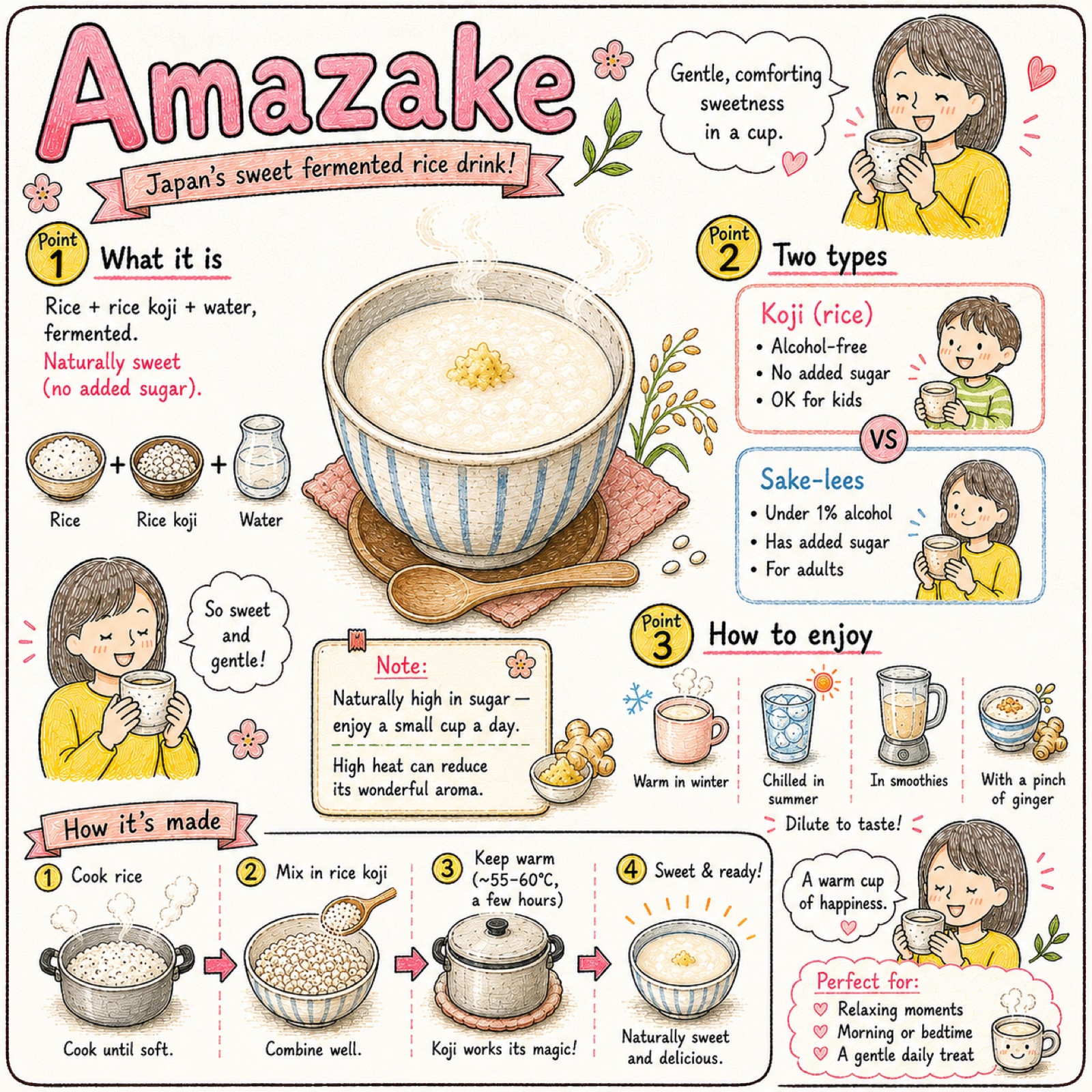
Amazake is a thick, naturally sweet drink made from fermented rice — creamy, comforting, and a long-time favorite for cold mornings and tired summer afternoons. It’s a fixture of Japanese New Year, a traditional summer cooler, and lately a darling of the global wellness scene. This guide explains what amazake is loved for, the two very different types (one is alcohol-free, one is not), how it’s made, and how to drink it.
Why Amazake Is Loved
Amazake has been enjoyed in Japan for well over a thousand years, valued for being both sweet and satisfying.
- Naturally sweet from fermentation. In koji amazake, the koji’s enzymes break the rice’s starch down into glucose, creating a gentle sweetness without any added sugar.
- A product of koji fermentation. Amazake contains B vitamins and amino acids that come from the rice and the koji fermentation process.
- A traditional comfort drink. Warm in winter, chilled in summer, it has long been a familiar drink across the seasons.
Two honest notes:
- Sugar. Even without added sugar, amazake is naturally high in sugars (roughly 20 g in a small cup). It’s best enjoyed as a treat — about one small cup a day — rather than sipped all day long.
- Alcohol. This depends entirely on the type (see below): koji amazake is alcohol-free, but sake-lees amazake contains a little alcohol.
As with any food or drink, amazake is best enjoyed as part of a balanced diet.
The Two Types of Amazake
This is the most important thing to know before you buy. The two types share a name but are quite different.
| Type | Made from | Alcohol | Sugar | Best for |
|---|---|---|---|---|
| Koji (rice) amazake | Rice + rice koji + water | None | Natural, no added sugar | Everyone, incl. children |
| Sake-lees amazake | Sake kasu + water + sugar | Under 1% | Added sugar | Adults; richer & slightly boozy |
Sources: Japanese Taste; Kokoro Care; PMC, “Ingredients, Functionality and Safety of Amazake.” Check the label for type, alcohol, and added sugar.
What Is Amazake, and How Is It Made?
The traditional koji amazake needs just three things: rice, rice koji, and water — no sugar, no alcohol.
- Cook rice into soft rice or porridge.
- Mix in rice koji (rice cultured with Aspergillus oryzae) and keep it warm (around 55–60°C) for several hours.
- The koji’s enzymes saccharify the rice — turning its starch into glucose — which is where all that natural sweetness comes from.
- The result is a thick, sweet, alcohol-free drink.
Sake-lees amazake takes a shortcut: it’s made by dissolving sake kasu (the lees left over from brewing sake) in water and sweetening it with sugar — which is why it contains a trace of alcohol.
How to Drink and Enjoy Amazake
- Hot or cold. Warm it gently for a cozy winter drink, or serve it chilled and a little diluted as a refreshing summer cooler.
- Thin it to taste. Amazake is thick; many people dilute it with water, hot tea, or milk (dairy or plant) to their preferred consistency.
- Blend it into smoothies. Its natural sweetness makes amazake a great base for smoothies with banana, berries, or ginger.
- Use it as a natural sweetener. Stir it into oatmeal or yogurt, or use it in baking and dressings in place of some sugar.
- Try the classic touch. A tiny pinch of grated ginger on top is the traditional finish for hot amazake.
How to Choose and Store Amazake
- Pick your type. For an alcohol-free, no-added-sugar drink — and one suitable for children — choose koji (rice) amazake, often labeled kome-koji. If you don’t mind a trace of alcohol and added sugar, sake-lees (sake-kasu) amazake is richer and a little boozy.
- Check the label. Look for “rice koji” (kome-koji) versus “sake kasu,” and note any added sugar or alcohol.
- Store it cold. Keep opened amazake refrigerated and drink it within a few days; many products are also sold as shelf-stable concentrates to dilute.
Frequently Asked Questions
Is amazake alcoholic?
It depends on the type. Koji (rice) amazake is alcohol-free — it’s made without yeast, so no alcohol is produced. Sake-lees (sake-kasu) amazake is made from a sake by-product and usually contains less than 1% alcohol. Check the label if this matters to you.
Can children or pregnant women drink amazake?
Koji amazake is alcohol-free and is commonly enjoyed by children. Sake-lees amazake contains a small amount of alcohol, so it’s not suitable for children, anyone avoiding alcohol, or those who are pregnant. Always check which type you have.
Is amazake good for you?
Amazake is a traditional fermented drink that contains B vitamins and amino acids from the rice and koji. That said, it’s also high in natural sugars, so it’s best enjoyed in small amounts — about one cup a day — as part of a balanced diet.
Is amazake the same as sake?
No. Despite the similar name, koji amazake contains no alcohol and isn’t brewed like sake. Sake-lees amazake uses a by-product of sake but is still a sweet drink, not sake itself.
How much amazake should I drink?
Because it’s naturally high in sugar, a small cup a day is a sensible amount — enjoy it as a treat or a gentle pick-me-up rather than an all-day beverage.
A Sweet Sip of Fermented Tradition
Amazake is one of Japan’s oldest comfort drinks — sweet, warming, and made with nothing more than rice and the quiet work of koji. Reach for the rice-koji kind if you want it alcohol-free and unsweetened, warm it with a little ginger on a cold day, and keep the portions small. It’s an easy, delicious introduction to the world of Japanese fermentation.
About the author
KOBUO is the creator of Kobuo’s Japan Guide, sharing authentic Japanese food, traditions, and crafts with curious readers around the world. Every guide is carefully researched and paired with an original hand-drawn illustration. More about Kobuo →