Edamame are the bright green soybean pods you’ve probably squeezed open at a Japanese restaurant, popping the warm, salted beans straight into your mouth. They’re one of the easiest and most satisfying snacks in Japanese cooking — and one of the most nutritious, packing a serious dose of plant protein and fiber into a handful of pods. This guide explains what edamame is loved for, the main types, how it’s grown and prepared, and the best ways to cook and eat it.
Why Edamame Is Loved as a Health Food
Edamame are simply young soybeans, harvested while they’re still green and tender, and they deliver a lot in a small package.
- A good source of complete plant protein. Edamame is rich in protein and, like other soy foods, provides all nine essential amino acids — a complete protein that’s relatively rare among plants.
- High in fiber and folate. A serving of edamame contains a generous amount of dietary fiber, and it’s especially rich in folate, a B vitamin, as well as vitamin K.
- Nutritious for very few calories. Edamame provides iron, calcium, and soy isoflavones while staying naturally low in calories — which is why a bowl of pods makes such a satisfying snack.
One honest note: edamame is a soy food, and very large amounts of soy may affect thyroid function in some people — especially those with a thyroid condition or low iodine intake. Most people are fine with normal amounts, but check with your doctor if that applies to you (or if you have a soy allergy). And since edamame is usually served salted, go easy on the salt if you’re watching your sodium. As with any food, enjoy it as part of a balanced diet.
The Types of Edamame
Most edamame you’ll buy is the same young green soybean, sold in a few convenient forms — plus some prized regional varieties in Japan. Here’s how the common ones compare.
| Type / Form | What it is | Best for |
|---|---|---|
| Frozen, in-pod (saya) | Pre-blanched pods, flash-frozen at peak ripeness | Everyday snacking; quick boil or steam from frozen |
| Frozen, shelled (mukimi) | Beans already removed from the pod | Salads, fried rice, soups, dips — no podding |
| Fresh, in-pod | In-season summer pods, plump and bright green | Best flavor when cooked the day you buy them |
| Dadacha-mame | Prized variety from Tsuruoka, Yamagata; very sweet and umami | A seasonal delicacy — eaten simply, salted |
| Chamame (“tea bean”) | Brownish bean with a fragrant, sweet aroma | A premium gift edamame; enjoyed plain |
| Kuro-edamame (black soybean) | Young black soybeans, e.g. from the Tamba region; large and richly sweet | An autumn treat with a fluffy, sweet bite |
Sources: Wikipedia, Food in Japan, Japan Hoppers.
What Is Edamame, and How Is It Made?
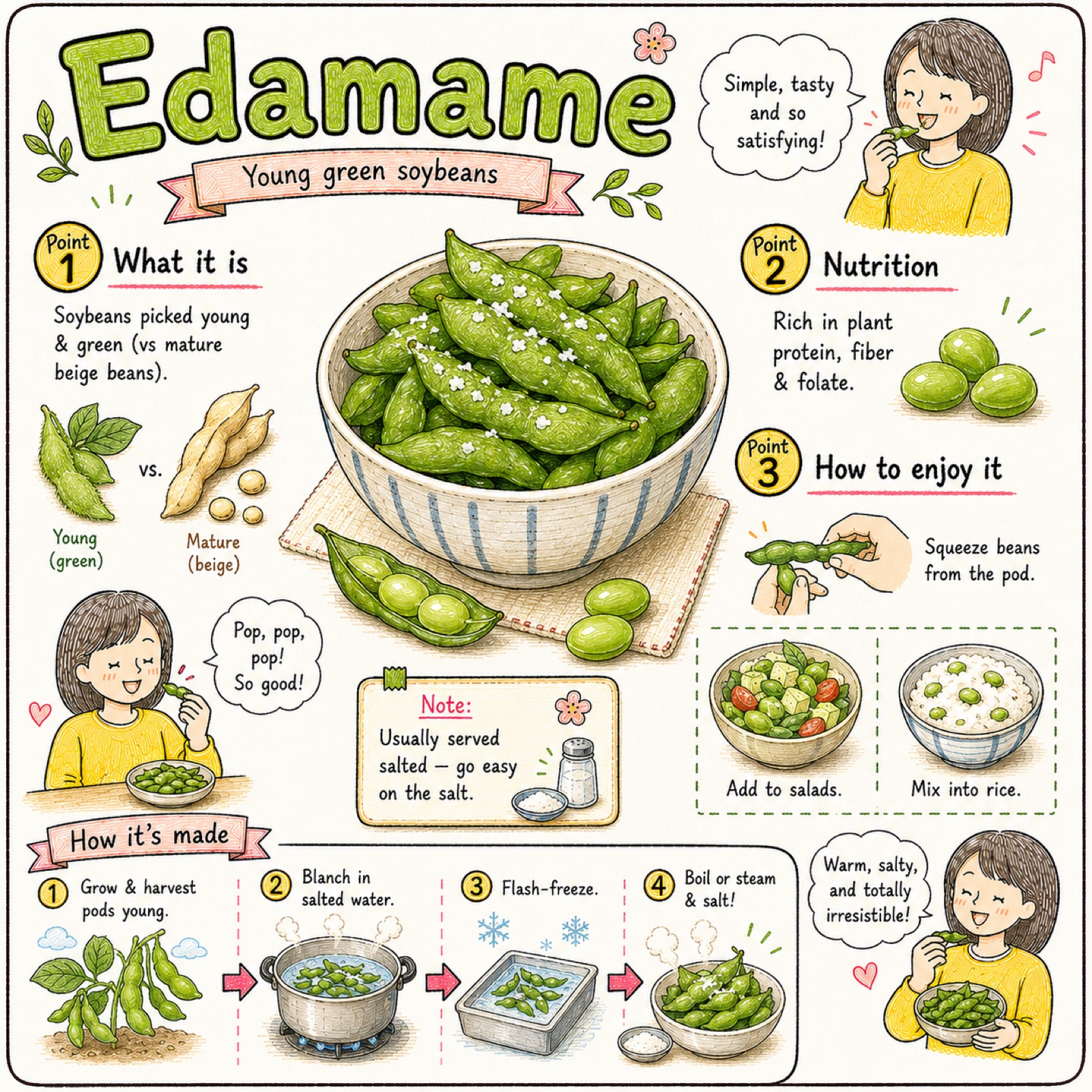
Edamame and tofu come from the very same plant — the difference is timing. Edamame are soybeans picked young and green, before they harden into the mature beige beans used for tofu, miso, and soy sauce.
- Grow soybeans and harvest the pods early, when they’re plump and green but not yet dried out.
- Blanch the pods briefly in boiling salted water to set their bright color and fresh flavor.
- For frozen edamame, the blanched pods are flash-frozen to lock in nutrients and texture.
- To eat, the pods are boiled or steamed for a few minutes and finished with salt.
Because they’re picked young, edamame are sweeter, greener, and more vegetable-like than mature soybeans — closer to a fresh garden pea than to dried beans.
How to Cook and Eat Edamame
Edamame is about as easy as cooking gets, and there’s more to do with it than snacking:
- Boil or steam the pods. Drop pods into boiling salted water for 4–5 minutes, or steam them for 5–7 minutes, until just tender. Steaming keeps the color brightest. Drain and toss with flaky sea salt while hot.
- Cook straight from frozen. Most frozen edamame is already blanched, so it just needs a few minutes of boiling or steaming — no thawing required. This makes it a genuinely two-minute snack.
- Eat the classic way. Hold a salted pod, squeeze the beans straight into your mouth, and discard the pod. Don’t eat the fibrous pod itself.
- Use shelled beans in cooking. Toss shelled edamame into salads, fried rice, grain bowls, soups, and pasta, or blend them into a bright green dip or hummus.
- Dress them up. Beyond plain salt, try edamame with garlic, chili, sesame oil, or a sprinkle of furikake for an easy flavor upgrade.
A quick tip: salt the cooking water and finish with salt on the outside of the pods — the seasoning clings to the shell, so you taste it as you eat.
How to Choose and Store Edamame
- Fresh or frozen, both work. Frozen edamame is picked and frozen at peak ripeness, so it’s reliable and available year-round. Fresh pods (in season in summer) should look plump and bright green; cook them as soon as possible.
- In-pod or shelled. Buy in-pod (saya) for snacking, and shelled (mukimi) for adding to recipes without the work of podding.
- Store it cold. Keep frozen edamame in the freezer until you need it. Cooked edamame keeps in an airtight container in the fridge for up to 3 days — great to make ahead for quick snacks.
Frequently Asked Questions
Is edamame good for you?
Edamame is a low-calorie source of complete plant protein, fiber, folate, and vitamin K, with iron, calcium, and soy isoflavones as well. The main things to keep in mind are that it’s a soy food (so very large amounts may matter for people with thyroid conditions or soy allergy) and that it’s usually salted — easy to overdo if you’re watching sodium. In normal amounts, it’s a nutritious snack.
What’s the difference between edamame and regular soybeans?
They’re the same plant at different stages. Edamame are soybeans harvested young and green, so they’re sweet, tender, and eaten as a vegetable. Mature soybeans are left to ripen and dry into firm beige beans, which become tofu, miso, soy sauce, and soy milk.
Can you eat the edamame pod?
No — the fuzzy outer pod is fibrous and not eaten. Squeeze or pop the beans out and discard the shell. Cooking the beans in the pod simply helps them stay moist and pick up the salt.
How do you cook frozen edamame?
Cook it straight from frozen — no need to thaw. Boil the pods for about 4–5 minutes or steam them for 5–7 minutes until tender, then drain and sprinkle with salt. Most frozen edamame is pre-blanched, so it cooks very quickly.
Is edamame a complete protein?
Yes. Like other soy foods, edamame contains all nine essential amino acids, which makes it one of the few plant foods considered a complete protein — a big reason it’s popular with vegetarians and vegans.
A Little Green Pod With a Lot Inside
Edamame proves that healthy food doesn’t have to be complicated. A bag of frozen pods, a pot of salted water, and five minutes is all it takes to put a bowl of complete plant protein, fiber, and folate on the table. Snack on them straight from the pod, toss the shelled beans into your cooking, and you’ll see why these young green soybeans have been a favorite in Japan for generations.
About the author
KOBUO is the creator of Kobuo’s Japan Guide, sharing authentic Japanese food, traditions, and crafts with curious readers around the world. Every guide is carefully researched and paired with an original hand-drawn illustration. More about Kobuo →