If your only experience of “green tea” is a dusty teabag that tastes faintly of hay, authentic Japanese green tea will surprise you — both in the cup and in why it’s so woven into Japan’s healthy, beauty-conscious way of life. This guide starts with what green tea is actually loved for and how it compares to coffee, then walks through the main types, how to choose well, and how to brew each one so it tastes the way it should.
- Why Japanese Green Tea Is Loved for Health and Beauty
- Green Tea vs. Coffee, Black Tea & Oolong: By the Numbers
- The Main Types of Japanese Green Tea
- What Makes Japanese Green Tea Different?
- How to Choose Good Japanese Green Tea
- How to Brew It (Temperature Really Matters)
- Ways to Enjoy Japanese Green Tea
- Where to Find Authentic Japanese Tea
- Frequently Asked Questions
- A Cup Worth Slowing Down For
Why Japanese Green Tea Is Loved for Health and Beauty
Beyond its flavor, Japanese green tea has long been valued as part of a healthy, mindful lifestyle — one reason it’s so woven into daily life in Japan.
- Naturally rich in antioxidants. Green tea is one of the best-known dietary sources of catechins, a group of plant antioxidants (the most-studied is called EGCG).
- The “calm focus” of L-theanine. Green tea contains L-theanine, an amino acid often associated with a sense of relaxed alertness. Paired with tea’s gentle caffeine, many people find it gives steadier, calmer energy than coffee.
- Light and unsweetened. On its own, green tea is essentially calorie-free, making it an easy everyday swap for sugary drinks.
- A staple of beauty routines. Thanks to its antioxidant content, green tea — and matcha especially — has become a popular ingredient in skincare and a fixture of many people’s daily beauty and wellness routines, from matcha lattes to face masks.
- A ritual that slows you down. Part of the appeal is the act itself — warming the cup, whisking the matcha, and pausing for a few quiet minutes.
In Japan, green tea has been part of everyday life — and the traditional diet often linked with longevity — for centuries. As with any food, it’s best enjoyed as part of a balanced diet rather than treated as a cure-all, but it’s easy to see why it has been cherished for so long.
Green Tea vs. Coffee, Black Tea & Oolong: By the Numbers
How does Japanese green tea actually compare with other popular drinks? Figures below are typical amounts for one cup (about 240 ml / 8 oz) and vary with the leaf, brewing time, and water temperature.
Bar length is proportional to a typical cup (gray = full scale); ranges shown at right.
| Drink | Caffeine / cup | L-theanine | Main antioxidants | Oxidation |
|---|---|---|---|---|
| Green tea | 20–45 mg | Yes — high in shaded types | Catechins (EGCG) — highest | None |
| Oolong tea | 30–55 mg | Yes | Catechins + theaflavins | Partial |
| Black tea | 40–70 mg | Yes | Theaflavins, thearubigins | Full |
| Coffee | 95–120 mg | None | Chlorogenic acids | n/a |
The pattern is consistent: coffee has by far the most caffeine, while green tea sits at the gentle end. Tea is also the only one of these drinks that contains L-theanine, and green tea, being unoxidized, keeps the most catechins (EGCG).
Sources: USDA FoodData Central; Oregon State University, Linus Pauling Institute, “Tea”; Mayo Clinic, “Caffeine content for coffee, tea, soda and more.” Values are typical ranges and vary by preparation.
The Main Types of Japanese Green Tea
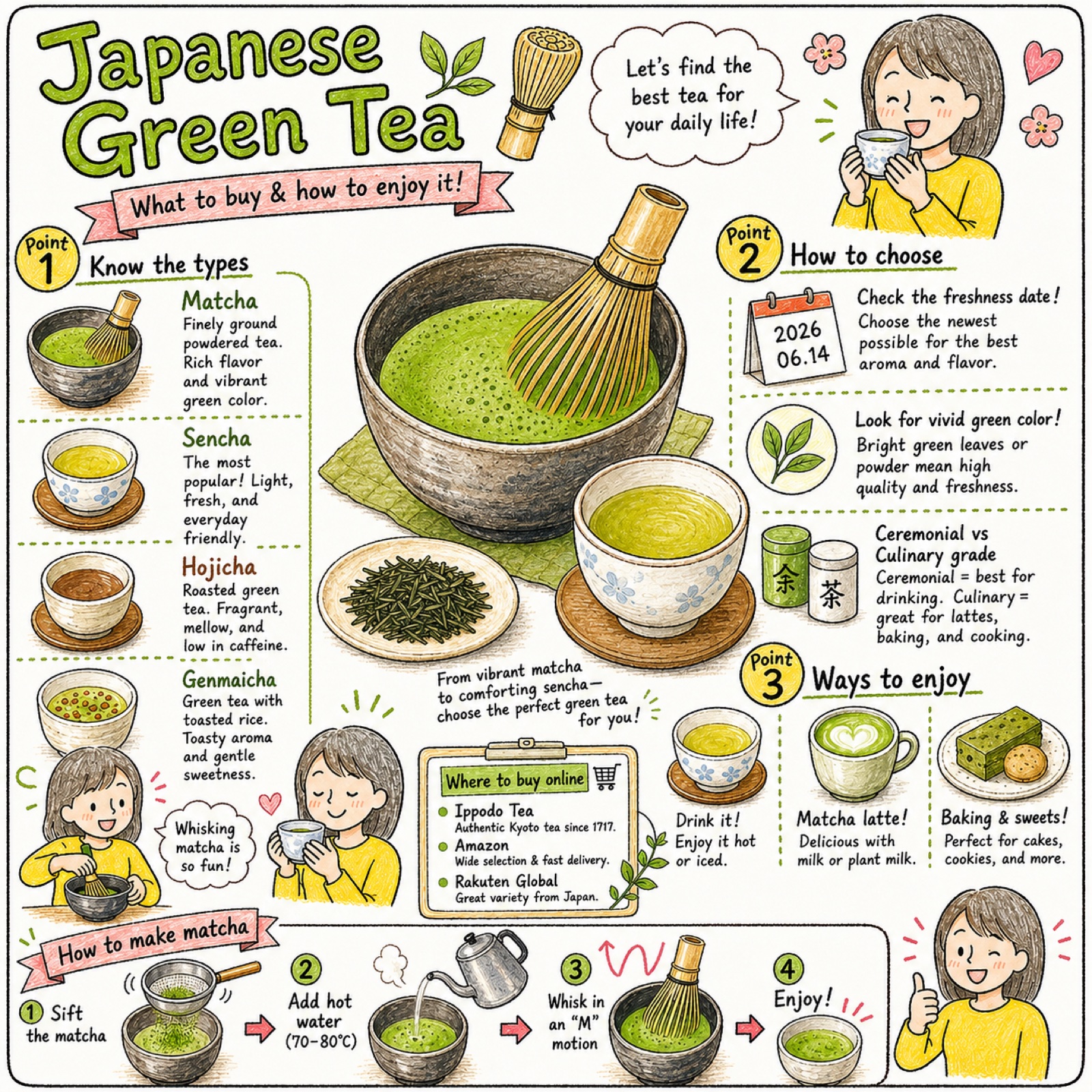
- Matcha — Shade-grown leaves stone-ground into a fine powder. You don’t steep it; you whisk it into hot water until frothy, so you drink the whole leaf. Vivid green, rich, and full of umami. Sold as ceremonial grade (best for drinking straight) and culinary grade (for lattes, baking, and cooking).
- Sencha — The everyday tea of Japan and the most widely consumed. Steamed whole leaves brewed in hot water, giving a fresh, balanced cup with a gentle grassy sweetness.
- Gyokuro — A premium shade-grown tea. Intensely smooth and sweet with very little bitterness, brewed at a low temperature to bring out maximum umami.
- Hojicha — Roasted green tea. Brown in color, toasty and mellow, with low caffeine — a popular choice for the evening or for children.
- Genmaicha — Green tea blended with toasted brown rice. Nutty, comforting, and mild, with a lovely aroma.
You may also see bancha (an everyday, lighter tea harvested later in the season) and kukicha (made from stems and twigs) — both gentle and easy to drink.
What Makes Japanese Green Tea Different?
Most Japanese green tea is steamed shortly after harvest, rather than pan-fired like many Chinese green teas. That single step locks in a bright green color and a fresh, grassy, almost marine character you don’t find elsewhere.
The other signature is umami — a savory depth that comes largely from the L-theanine mentioned above. Shade-grown teas like matcha and gyokuro have especially high levels, which is why they taste rich and smooth rather than sharp, and why they keep more of their catechins than fully oxidized teas.
How to Choose Good Japanese Green Tea
- Freshness first. Green tea is best enjoyed fresh. Look for a harvest or packed date, and buy in smaller amounts you’ll finish within a few months rather than one giant tin.
- Color and aroma. Good matcha and sencha are vivid green with a fresh, grassy or marine aroma. Dull, yellow-brown, or flat-smelling tea is usually old or low quality.
- Match the grade to the purpose. For drinking matcha on its own, choose ceremonial grade; for lattes and baking, culinary grade is perfect and more affordable.
- Origin can be a clue. Famous tea regions include Uji (Kyoto), Shizuoka, and Kagoshima.
- Buy from specialists. Reputable Japanese tea houses and sellers are the safest way to get authentic, Japanese-grown leaf rather than a generic blend.
How to Brew It (Temperature Really Matters)
The most common mistake is using water that’s too hot, which makes green tea bitter. As a rough guide:
- Matcha — Sift the powder, add hot water at about 70–80°C (158–176°F), and whisk briskly in an “M” or “W” motion until a fine froth forms.
- Sencha — Brew at about 70–80°C and steep for around 1 minute.
- Gyokuro — Use cooler water, around 50–60°C (122–140°F), and steep longer for a sweet, full-umami cup.
- Hojicha & Genmaicha — These like it hotter, around 95°C (203°F), with a short steep.
A small kitchen thermometer helps at first, but you’ll soon judge it by feel — and by letting just-boiled water cool for a minute or two.
Ways to Enjoy Japanese Green Tea
- Drink it hot or iced — cold-brewed sencha is wonderfully refreshing in summer.
- Make a matcha latte — culinary matcha blends beautifully with dairy or plant milk.
- Bake and cook with it — matcha adds color and flavor to cakes, cookies, and ice cream.
Where to Find Authentic Japanese Tea
In Japan, you’ll find excellent tea at specialist tea shops and in the food halls of department stores. Long-established houses — such as Ippodo in Kyoto, founded in 1717 — are a good place to start.
Outside Japan, many authentic Japanese tea brands now ship internationally. Wherever you buy, the same rules apply: look for Japanese-grown leaf, a recent freshness date, and a clear grade.
Frequently Asked Questions
Is green tea better for you than coffee?
Neither is simply “better” — it depends on what you’re after. Coffee delivers far more caffeine for a strong lift, while green tea offers a gentler amount alongside L-theanine, which many people find gives a calmer, steadier focus. Green tea is also rich in catechins and easy to enjoy unsweetened throughout the day.
Which Japanese green tea has the least caffeine?
Roasted and later-harvest teas are the mildest. Hojicha, bancha, and kukicha are popular low-caffeine choices, and hojicha is a common evening tea. Shade-grown teas like matcha and gyokuro sit at the higher end.
What’s the best Japanese green tea for a beginner?
For an easy everyday cup, start with sencha — fresh, balanced, and the tea most people in Japan drink daily. If you prefer something mellow and low in caffeine, hojicha is a forgiving, friendly choice. Curious about matcha? A culinary-grade matcha in a latte is a gentle introduction before moving on to ceremonial grade.
Can you drink Japanese green tea every day?
Yes — green tea is enjoyed daily by millions of people in Japan. As with any caffeinated drink, it’s simply a matter of keeping your total caffeine for the day at a comfortable level and choosing lower-caffeine types like hojicha later in the day.
A Cup Worth Slowing Down For
Japanese green tea rewards a little attention. Once you’ve whisked a proper bowl of matcha or brewed a fresh cup of sencha at the right temperature, the dusty teabag version is hard to go back to. If you’re not sure where to begin, a fresh sencha or a mellow hojicha is a perfect first cup — brew it gently, and enjoy the small daily ritual that millions in Japan have loved for generations.
About the author
KOBUO is the creator of Kobuo’s Japan Guide, sharing authentic Japanese food, traditions, and crafts with curious readers around the world. Every guide is carefully researched and paired with an original hand-drawn illustration. More about Kobuo →