Bite into an umeboshi for the first time and your whole face will react — it’s intensely sour and salty, like almost nothing else you’ve tasted. Yet this small, wrinkled red plum is one of Japan’s most beloved everyday foods, eaten on rice, tucked into rice balls, and trusted for generations as a traditional pick-me-up. This guide explains what umeboshi is loved for, the different types and how salty each one is, how to choose, and how to actually eat it.
Why Umeboshi Is Loved as a Traditional Health Food
Umeboshi has been part of the Japanese table for centuries — not just for its punchy flavor, but for the role it has long played in everyday wellbeing.
- Rich in citric acid. That mouth-puckering sourness comes from citric acid, the same compound that makes lemons tart. Umeboshi is especially high in it, and in Japan it has traditionally been eaten for a refreshing lift — particularly in the hot, draining days of summer.
- A natural preservative. The salt and acidity of umeboshi have long been used to help keep food fresh. That’s the idea behind the classic hinomaru bento — a single red umeboshi on a bed of white rice — and why it’s a fixture of Japanese lunchboxes.
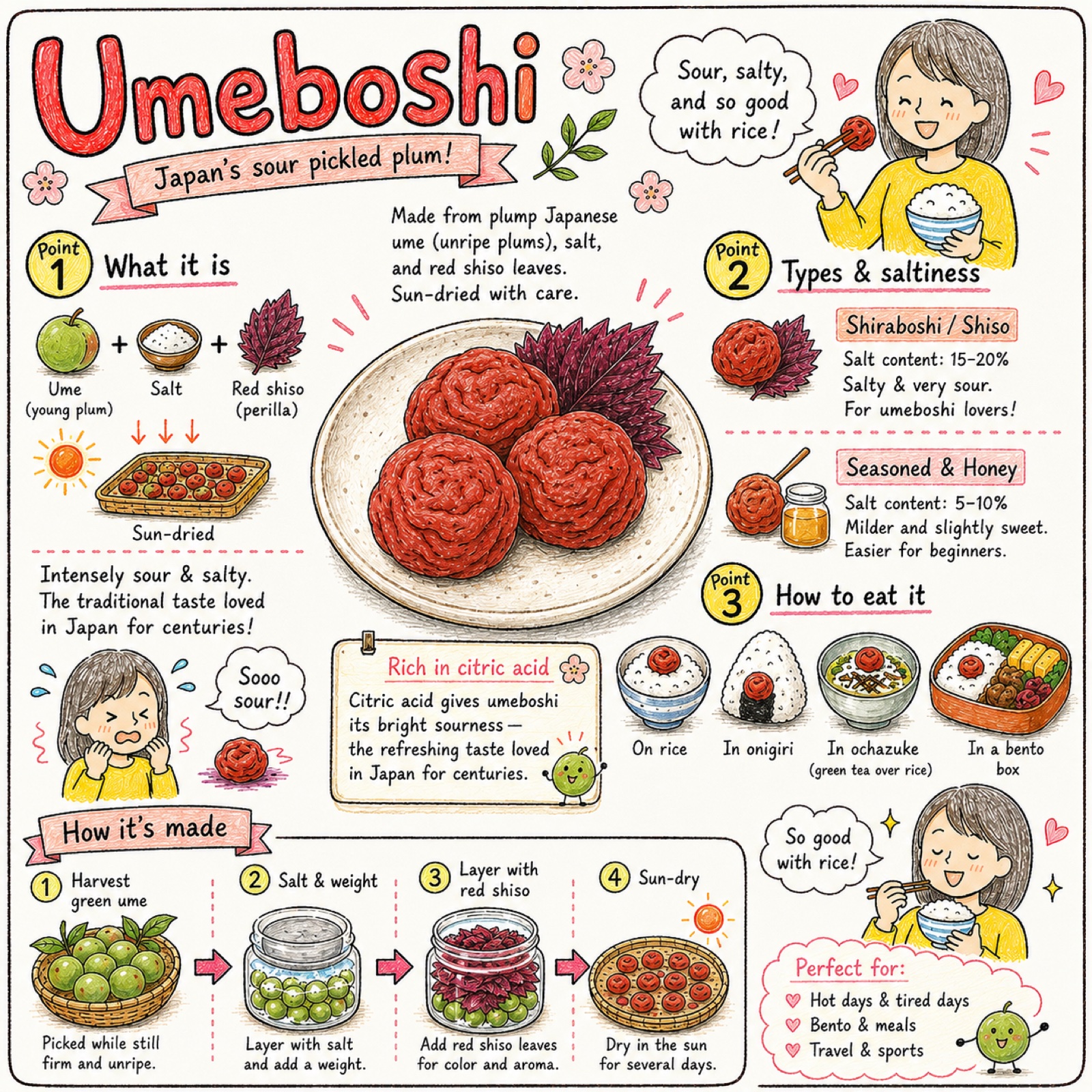
- A simple, traditional food. At its most basic, umeboshi is just ume (Japanese plum), salt, and often red shiso leaves — pickled and sun-dried, with nothing artificial needed.
One honest note on salt: traditional umeboshi is very high in salt — often around 18–20%. It’s meant to be eaten in small amounts, and a single plum is plenty. If you’re watching your sodium, reduced-salt and honey-sweetened types (below) are a gentler option. As with any food, umeboshi is best enjoyed as part of a balanced diet rather than treated as a cure-all.
The Types of Umeboshi
Not all umeboshi are equally sour or salty. Japan’s food standards even split them into two groups: plain umeboshi (pickled in salt, then dried) and seasoned umeboshi (re-flavored with things like honey, dashi, or kelp). Here’s how the main types compare.
| Type | Salt | Flavor | Shelf life | Best for |
|---|---|---|---|---|
| Shiraboshi (white) | ~18–20% | Very sour & salty | Years, room temp | Traditional, cooking |
| Shiso (red) | ~15–20% | Sour, fragrant, classic red | Years | The classic umeboshi |
| Seasoned (dashi/kelp/bonito) | ~7–17% | Milder, savory | Months, refrigerate | Easy everyday eating |
| Honey (hachimitsu) | ~5–8% | Sweet-sour, mild | Months, refrigerate | Beginners & children |
Salt percentages are typical ranges and vary by maker. Sources: Nippon.com, “Umeboshi”; Japan Agricultural Standards (JAS).
What Is Umeboshi, and How Is It Made?
Umeboshi is made from ume, a fruit related to the plum and apricot, harvested green in early summer. The traditional process is beautifully simple:
- Harvest the green ume.
- Salt them and let them rest under a weight, drawing out their juice (umezu, or plum vinegar).
- Layer with red shiso leaves, which give classic umeboshi their deep red color and fragrance.
- Sun-dry them over several hot days in midsummer (a step called doyo-boshi) until soft and wrinkled.
That’s it — salt, ume, shiso, and sunshine. Seasoned types add a desalting step and extra flavorings afterward.
How to Choose Umeboshi
- Pick your salt level. Traditional white (shiraboshi) and shiso types are intensely salty and sour; seasoned and honey types are milder and sweeter. Beginners usually prefer honey or seasoned.
- Check the ingredients. The simplest umeboshi lists just ume, salt, and shiso. Look for “additive-free” (無添加) if you want it traditional; seasoned types may include sweeteners and flavorings.
- Look at the variety. Kishu Nanko ume from Wakayama is the most famous premium plum — large, thick-fleshed, and soft.
- Mind the shelf life. High-salt umeboshi keeps for a very long time at room temperature; low-salt and honey types have a shorter life and should be refrigerated.
How to Eat Umeboshi
- With rice or in onigiri. The classic pairing — its saltiness is the perfect counterpoint to plain rice, and it’s the traditional filling for rice balls.
- In ochazuke. Drop one into a bowl of rice and pour over hot green tea or dashi for a quick, comforting meal.
- In a bento. Flavor and a natural preservative boost in one little plum.
- In cooking. Mashed into salad dressings, paired with fish or chicken, or stirred into drinks for a sour kick.
If you’re new to umeboshi, start small — even half a plum is enough to get the idea. A mild honey type is the friendliest first taste.
Frequently Asked Questions
Is umeboshi good for you?
Umeboshi is a traditional food valued in Japan for its citric acid and its refreshing, appetite-piquing sourness. The main thing to keep in mind is salt: traditional umeboshi is very high in sodium, so it’s best enjoyed in small amounts as part of a balanced diet. Reduced-salt and honey types are easier on the sodium.
Why is umeboshi so salty?
Salt is what preserves it. Traditional umeboshi is pickled at around 18–20% salt, which lets it keep for a very long time without spoiling. Modern seasoned and honey types are partly desalted, so they’re milder — but they don’t last as long.
What does umeboshi taste like?
Intensely sour and salty, with a soft, chewy texture. Honey-sweetened types add sweetness to balance the sourness, making them much easier for first-timers and children.
Which umeboshi is best for beginners?
Start with a honey (hachimitsu) or seasoned umeboshi — they’re lower in salt and far less sharp than traditional white or shiso types. Try half a plum with plain rice.
How long does umeboshi last?
Traditional high-salt umeboshi can keep for years at room temperature. Low-salt, seasoned, and honey types have added sugars or less salt, so they spoil faster and should be kept refrigerated and eaten within a few months.
A Small Plum With a Big Place in Japanese Life
Few foods are as instantly, intensely Japanese as umeboshi. It’s the red dot at the center of a lunchbox, the salty bite that makes a bowl of plain rice come alive, and a taste of a centuries-old way of preserving the summer harvest. Start with a mild honey type, eat it the classic way — perched on warm rice — and you’ll understand why this fiercely sour little plum has been loved in Japan for so long.
About the author
KOBUO is the creator of Kobuo’s Japan Guide, sharing authentic Japanese food, traditions, and crafts with curious readers around the world. Every guide is carefully researched and paired with an original hand-drawn illustration. More about Kobuo →