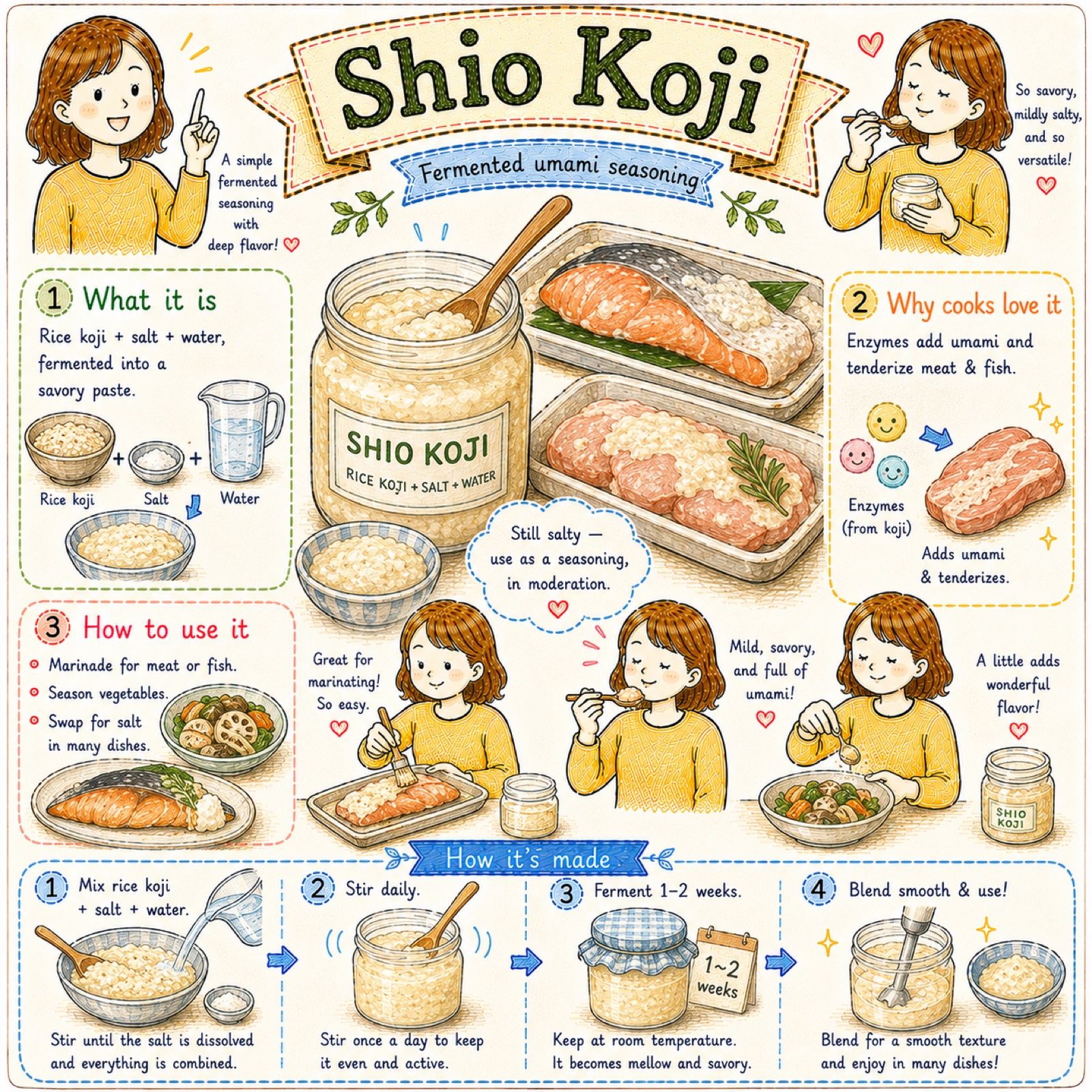
Shio koji is one of those quiet Japanese kitchen secrets that, once you try it, you never want to be without. Made from just three humble ingredients — rice koji, salt, and water — this fermented seasoning has a gentle, mellow saltiness and a deep savory roundness that makes almost any ingredient taste like a better version of itself. Cooks use it to marinate and tenderize meat and fish, to season vegetables, and as a more flavorful stand-in for plain salt. This guide explains what shio koji is loved for, the related koji seasonings, how it’s made, and — most usefully — plenty of ways to actually cook with it.
Why Shio Koji Is Loved
Shio koji has been part of Japanese home cooking for generations, prized for turning simple ingredients into something memorable.
- A natural flavor enhancer. The koji’s enzymes break down protein and starch in food, which adds umami and a gentle natural sweetness — so a single seasoning brings salt and savory depth at the same time.
- A product of koji fermentation. Shio koji is made with koji (rice cultured with the mold Aspergillus oryzae, the same mold used for miso, soy sauce, and sake). It’s a traditional fermented seasoning rather than a manufactured one.
- A genuine meat and fish tenderizer. The enzymes that develop during fermentation break down muscle proteins, which is why shio koji makes meat noticeably softer and juicier — a culinary effect cooks have relied on for years.
One honest note on salt: shio koji is still a salt-based seasoning (roughly 12–13% salt by weight). It’s meant to be used in moderation in place of the salt you’d otherwise add, not poured on freely. A spoonful seasons a whole portion, which is exactly how it’s designed to work. As with any seasoning, enjoy it as part of a balanced diet.
The Types of Shio Koji
Shio koji belongs to a small family of koji seasonings, and it helps to know how it differs from its closest cousins — especially soy-sauce-based shoyu koji — and from plain salt and miso. The table below compares them side by side.
| Seasoning | Made From | Flavor | Salt by Weight | Best For |
|---|---|---|---|---|
| Shio koji | Rice koji + salt + water | Mellow, gently sweet, rounded umami | ~12–13% | Marinating & tenderizing meat/fish, quick pickles, a savory salt swap |
| Shoyu koji | Rice koji + soy sauce | Rich, soy-forward; far more glutamate umami than shio koji | Varies (soy-sauce based) | A flavorful stand-in for soy sauce; dipping & finishing |
| Miso | Soybeans + koji + salt | Thick, deep, savory paste | High (varies by type) | Soups, glazes, marinades, dressings |
| Plain salt | Salt only | Pure saltiness, no umami | 100% | Basic seasoning (no tenderizing effect) |
Sources: Just One Cookbook — How to Make Shio Koji; mai-rice.com — How to Use Shio Koji (salt ratio); Kikkoman Food Forum — Salt Koji and Soy Sauce Koji; Shoyu Koji vs. Shio Koji; Wikipedia — Aspergillus oryzae.
What Is Shio Koji, and How Is It Made?
Traditional shio koji needs just three things: rice koji, salt, and water — and a little patience.
- Loosen the rice koji by rubbing the cultured grains apart with your hands so they separate cleanly.
- Mix in the salt, then add water until everything is combined into a loose, porridge-like mixture.
- Ferment at room temperature for one to two weeks (faster in summer, slower when it’s cool), stirring once a day so it develops evenly.
- The mixture becomes soft, slightly sweet-smelling, and mellow as the koji’s enzymes do their work — and it’s ready when the grains have softened and the aroma turns gently sweet and savory.
That koji fermentation is what gives shio koji its rounded, umami-rich character — and the enzymes it produces are exactly what tenderize meat and fish later in your cooking.
How to Cook With Shio Koji
This is where shio koji earns its place on the shelf. The golden rule is simple: use it in place of salt, since it’s already salty, and let its enzymes do the rest.
- Marinate and tenderize meat. Coat chicken, pork, or beef in shio koji (about 10% of the meat’s weight is a good starting point) and refrigerate. Chicken is lovely after a couple of hours; tougher cuts benefit from a full day. The enzymes break down the proteins, leaving the meat juicier and more tender, with deeper savory flavor.
- Season fish and seafood. A light coating for 30 minutes to a few hours firms up the flesh and brings out a clean, savory taste. Classic Japanese cooks use it on white fish, salmon, and shellfish.
- Don’t over-marinate, and wipe before cooking. Going much past a day can leave proteins too soft, so stick to a day or so for meat. Because shio koji contains natural sugars, wipe off the excess before grilling or pan-frying and cook over moderate heat, so the surface doesn’t scorch before the inside is done.
- Make quick vegetable pickles. Toss sliced cucumber, cabbage, daikon, or carrot with a little shio koji and let them sit for an hour or more. You get crisp, lightly fermented-tasting pickles with no special equipment.
- Whisk it into dressings and sauces. Shio koji, rice vinegar, and a little sesame oil make a fast dressing for salads or steamed vegetables. It also adds savory depth to soups, stir-fries, and stews.
- Swap it for salt. Use shio koji anywhere you’d reach for salt — it seasons and adds umami. As a rough guide, about 2 tablespoons of shio koji stands in for 1 teaspoon of salt, so taste as you go.
How to Choose and Store Shio Koji
- Pick a form that suits you. Shio koji comes as a thick paste (with visible softened rice grains, great for marinades and pickles) and as a smooth liquid version that’s easy to brush, drizzle, and measure. Both work the same way; the liquid is simply tidier for quick seasoning.
- Check the ingredients. The simplest products list just rice koji, salt, and water. That’s all authentic shio koji needs.
- Store it cold. Keep opened shio koji in the fridge with a clean spoon, and it will last for weeks. If you make it yourself, refrigerate it once it’s fermented to slow things down. It naturally deepens in color over time, which is harmless.
Frequently Asked Questions
Is shio koji good for you?
Shio koji is a traditional fermented seasoning made from rice koji, salt, and water. The main thing to keep in mind is salt — it’s a salt-based seasoning (around 12–13% salt), so it’s best used in moderation in place of the salt you’d otherwise add, as part of a balanced diet.
What’s the difference between shio koji and shoyu koji?
Shio koji is made with salt, so it’s a mellow, all-purpose marinade that makes ingredients taste like a better version of themselves. Shoyu koji is made with soy sauce instead of salt, so it carries a richer, soy-forward flavor and far more glutamate umami — it works best as a flavorful stand-in for soy sauce.
How long should I marinate meat in shio koji?
For chicken, a couple of hours to a day; for tougher cuts of pork or beef, up to a full day. Avoid going much past that, since the enzymes can over-soften the texture. Wipe off the excess before cooking so the natural sugars don’t burn.
Can I use shio koji instead of salt?
Yes — that’s one of its best uses. Because it’s roughly 12–13% salt, you use more of it than you would salt: about 2 tablespoons of shio koji for every teaspoon of salt. It adds umami along with the saltiness, so taste as you adjust.
How long does shio koji last?
Stored cold with a clean spoon, opened shio koji keeps for several weeks in the fridge. It darkens slightly with age, which is normal and harmless.
The Seasoning That Makes Everything Taste More Like Itself
Few ingredients give back as much as shio koji asks for so little. A spoonful turns plain chicken into something tender and savory, ordinary vegetables into quick pickles, and a pinch of salt into rounded, umami-rich seasoning. Keep a jar in the fridge, use it wherever you’d use salt, and remember to wipe it off before the pan gets hot — and you’ll find this gentle fermented seasoning quietly improving almost everything you cook.
About the author
KOBUO is the creator of Kobuo’s Japan Guide, sharing authentic Japanese food, traditions, and crafts with curious readers around the world. Every guide is carefully researched and paired with an original hand-drawn illustration. More about Kobuo →