In much of the West, burdock is a wild plant with sticky burrs that catch on your socks — not something you’d put on your plate. In Japan, it’s dinner. Gobo, the long, slender root of the burdock plant, is a beloved everyday vegetable: earthy, crunchy, and turned into some of the most comforting dishes in the Japanese kitchen. If you’ve ever had the savory shredded vegetable tucked into a bento or floating in a hearty miso soup, you’ve likely already tasted it. This guide explains what gobo is loved for, the forms you’ll find it in, how to prepare it, and all the ways to cook with it.
Why Gobo Is Loved
Gobo has been eaten in Japan for centuries, and it brings something most vegetables can’t: a deep, woodsy flavor and a firm bite that holds up beautifully to cooking.
- High in dietary fiber. Gobo is high in dietary fiber, mostly insoluble fiber, along with some soluble fiber such as inulin. This is a big part of why it has such a satisfying, substantial character.
- A satisfying, earthy flavor. Gobo has a distinct earthy taste with a hint of natural sweetness, and it stays pleasantly crunchy even after long cooking — unusual for a root vegetable.
- Low in calories. For all that flavor and texture, gobo is low in calories, which is part of why it shows up so often in everyday Japanese home cooking.
One honest note: gobo is a genuinely fibrous root, so it needs to be cooked and prepared properly — you scrub it, cut it, and soak it before cooking (more on that below). And because it’s high in fiber, it’s wise to introduce it gradually if you’re not used to high-fiber foods. As with any food, enjoy gobo as part of a balanced diet.
The Forms of Gobo
Gobo turns up in stores in a few different forms depending on how much prep has already been done for you — from a whole muddy root to ready-to-cook shreds. Here’s how the common ones compare.
| Form | Prep needed | Character | Best use |
|---|---|---|---|
| Fresh whole root, soil on 泥付きごぼう |
Scrub off the soil, cut, and soak in water before cooking | Freshest flavor and firmest texture; keeps the longest because the soil protects the surface | Any dish when you want the best flavor and plan to cook soon-ish |
| Washed / pre-cut 洗いごぼう・カットごぼう |
Little to none; a quick rinse or soak, then cook | Clean and convenient, but doesn’t keep as long as soil-on root | Everyday cooking when you want to save time |
| Frozen / shredded 冷凍ささがきごぼう |
None; cook straight from frozen | Already cut and ready; softer texture than fresh, but no scrubbing or soaking | Kinpira, soups like tonjiru, and seasoned rice in a hurry |
Sources: Just One Cookbook (Gobo / Burdock Root); Kikkoman Corporation (Gobo Glossary); Japanese Taste (Gobo Guide).
What Is Gobo, and How Is It Prepared?
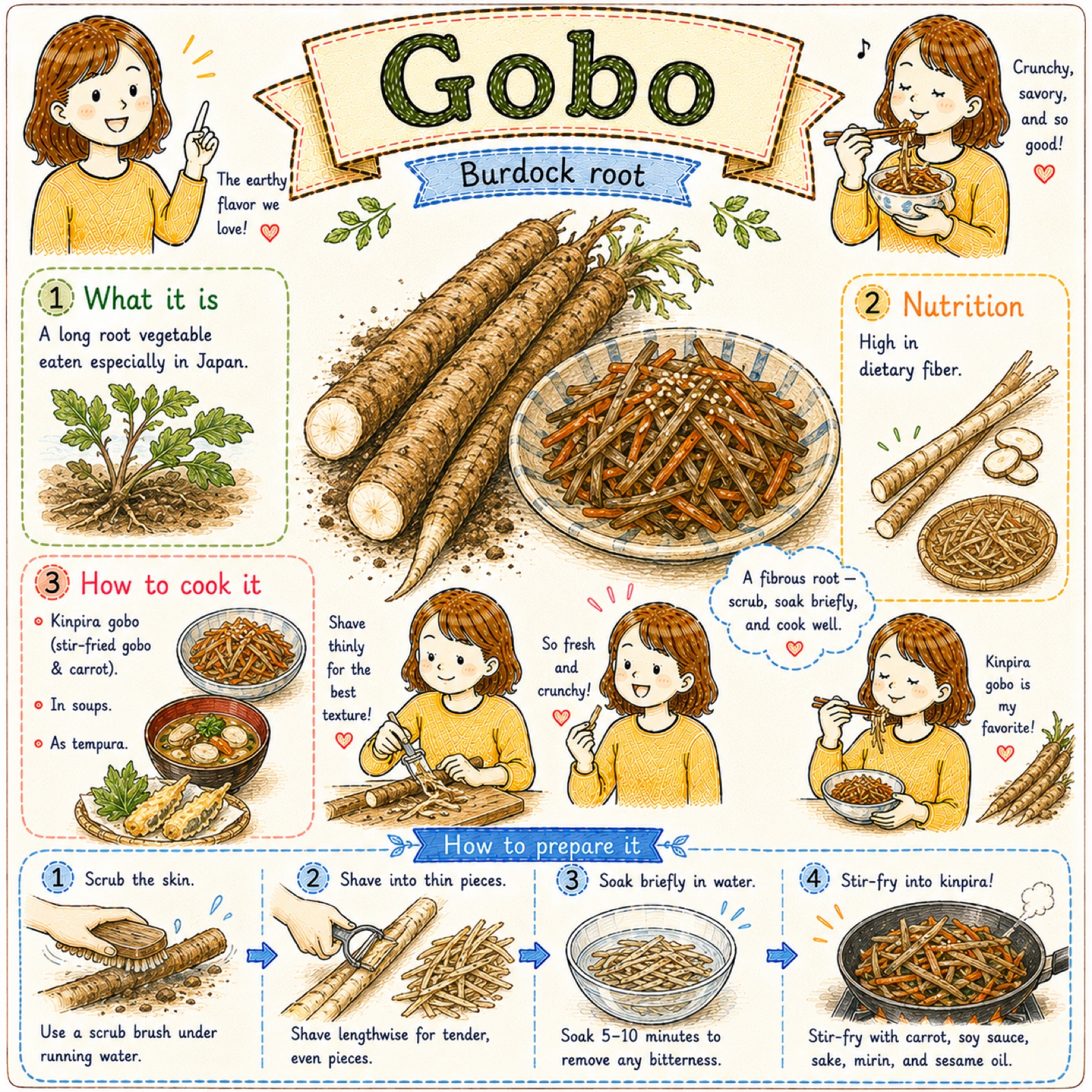
Gobo is the root of the burdock plant, harvested as a long, thin stick that can reach well over half a meter. The skin is where much of the flavor lives, so the goal is to clean it, not strip it. Here’s the basic prep:
- Scrub, don’t peel. Rinse the root and scrub the skin with the back of a knife or a stiff brush, rather than peeling it away. A thin layer of skin holds most of gobo’s aroma.
- Cut to suit the dish. Slice it thin on a diagonal, shave it into thin shreds (like sharpening a pencil — the sasagaki cut), or cut it into matchsticks, depending on what you’re making.
- Soak in water. Gobo browns quickly once cut because it oxidizes in the air. Soak the cut pieces in water for several minutes to reduce browning and tame its astringency. Plain water is enough; a splash of vinegar keeps it especially pale.
- Drain and cook. Pat the pieces dry and they’re ready for the pan or the pot.
The whole process is quick, but it’s worth doing — soaking is what gives gobo its clean, mellow flavor.
How to Cook With Gobo
Gobo is a vegetable that rewards cooking. Its firm texture and earthy flavor stand up to bold seasonings, and it never turns mushy. A few classic ways to use it:
- Kinpira gobo — the classic. This is the dish most Japanese people think of first: gobo and carrot cut into thin matchsticks, stir-fried in sesame oil, then simmered in soy sauce and mirin until glossy and savory-sweet. It keeps well, so it’s a bento staple.
- In soups. Shredded gobo is a key vegetable in tonjiru, the hearty pork-and-vegetable miso soup, where it adds depth and a gentle earthiness. It works in many simmered soups and stews.
- Takikomi gohan. Gobo is a traditional addition to this Japanese seasoned rice, cooked right in with the rice and other vegetables so every grain soaks up the flavor.
- Tempura. Thin shavings of gobo, battered and fried, turn crisp and nutty — a lovely contrast to the soft root inside.
- Tataki gobo. Boiled gobo is gently pounded to soften it, then dressed in a sesame sauce. It’s a traditional New Year (osechi) dish.
- Salads. Gobo also shines cold in a creamy sesame-mayo gobo salad, where its crunch really comes through.
How to Choose and Store Gobo
- Look for firm and straight. Choose roots that feel firm, not cracked, dry, or wrinkled, and that are evenly thick along their length. Soft or shriveled gobo is past its best.
- Keep it wrapped and cool. Wrap gobo to keep it from drying out and store it somewhere cool, or in the fridge during warmer months. Drying out makes it hard.
- Soil-on keeps longer. Gobo sold with its soil still on keeps longer than washed, pre-cut gobo, because the dirt protects the surface. Buy washed or pre-cut for convenience, soil-on for shelf life.
Frequently Asked Questions
What does gobo taste like?
Gobo has a distinct earthy, woodsy flavor with a touch of natural sweetness and a firm, crunchy texture that holds up even after long cooking. Soaking the cut pieces in water before cooking softens any harsh edge and gives it a cleaner taste.
Do I need to soak gobo before cooking?
Yes, it’s worth it. Gobo browns quickly once cut because it oxidizes in the air, and a few minutes in water reduces that browning and tames its astringency. Drain it before cooking.
Should I peel gobo?
No — scrub rather than peel. Most of gobo’s flavor and aroma sit just under the skin, so cleaning the surface with the back of a knife or a brush keeps more of its character than peeling does.
Is gobo high in fiber?
Yes. Gobo is high in dietary fiber, including the soluble fiber inulin. Because of that, it’s a good idea to introduce it gradually if you’re not used to high-fiber foods, and to enjoy it as part of a balanced diet.
Where can I buy gobo?
Look in Japanese and other Asian grocery stores, where you’ll find it fresh as a whole root, washed and pre-cut, or sometimes frozen and shredded for convenience.
A Humble Root Worth Knowing
Gobo is the kind of ingredient that quietly defines a cuisine. It’s not flashy — just a long, muddy root that needs a scrub and a soak — but a few minutes of prep turns it into something deeply satisfying: the savory crunch of kinpira, the warmth of a winter soup, the comfort of seasoned rice. Pick up a root the next time you spot one, give it a good scrub, and let it bring a little of Japan’s earthy, homey flavor to your table.
About the author
KOBUO is the creator of Kobuo’s Japan Guide, sharing authentic Japanese food, traditions, and crafts with curious readers around the world. Every guide is carefully researched and paired with an original hand-drawn illustration. More about Kobuo →