You already know nori even if you don’t know the name — it’s the thin, dark green-black sheet wrapped around a sushi roll or a rice ball. But nori is far more than a sushi wrapper. These paper-thin sheets of dried seaweed are one of the most nutrient-dense foods in the Japanese pantry, packed with umami and remarkably versatile. This guide explains what nori is loved for, the main types, how it’s made, and all the ways to use it.
Why Nori Is Loved as a Health Food
Nori has been harvested and eaten in Japan for centuries, and a single sheet delivers a lot for almost no calories.
- A lot of nutrition for very few calories. Nori is very low in calories but provides plant protein, fiber, vitamin A, folate, and minerals.
- A rare plant source of vitamin B12. Vitamin B12 is found mainly in animal foods, which makes nori unusual — it’s one of the few plant foods that contains it, of interest to many vegetarians and vegans.
- Naturally rich in umami. Nori is full of glutamate, the savory compound that lets a few sheets season a whole bowl of rice, soup, or eggs.
One honest note on iodine: seaweed is naturally high in iodine, and nori is no exception (though it’s lower than kelp or wakame). Most people are fine with everyday amounts, but if you have a thyroid condition, it’s worth keeping an eye on your seaweed intake and checking with your doctor. As with any food, enjoy nori as part of a balanced diet.
The Main Types of Nori
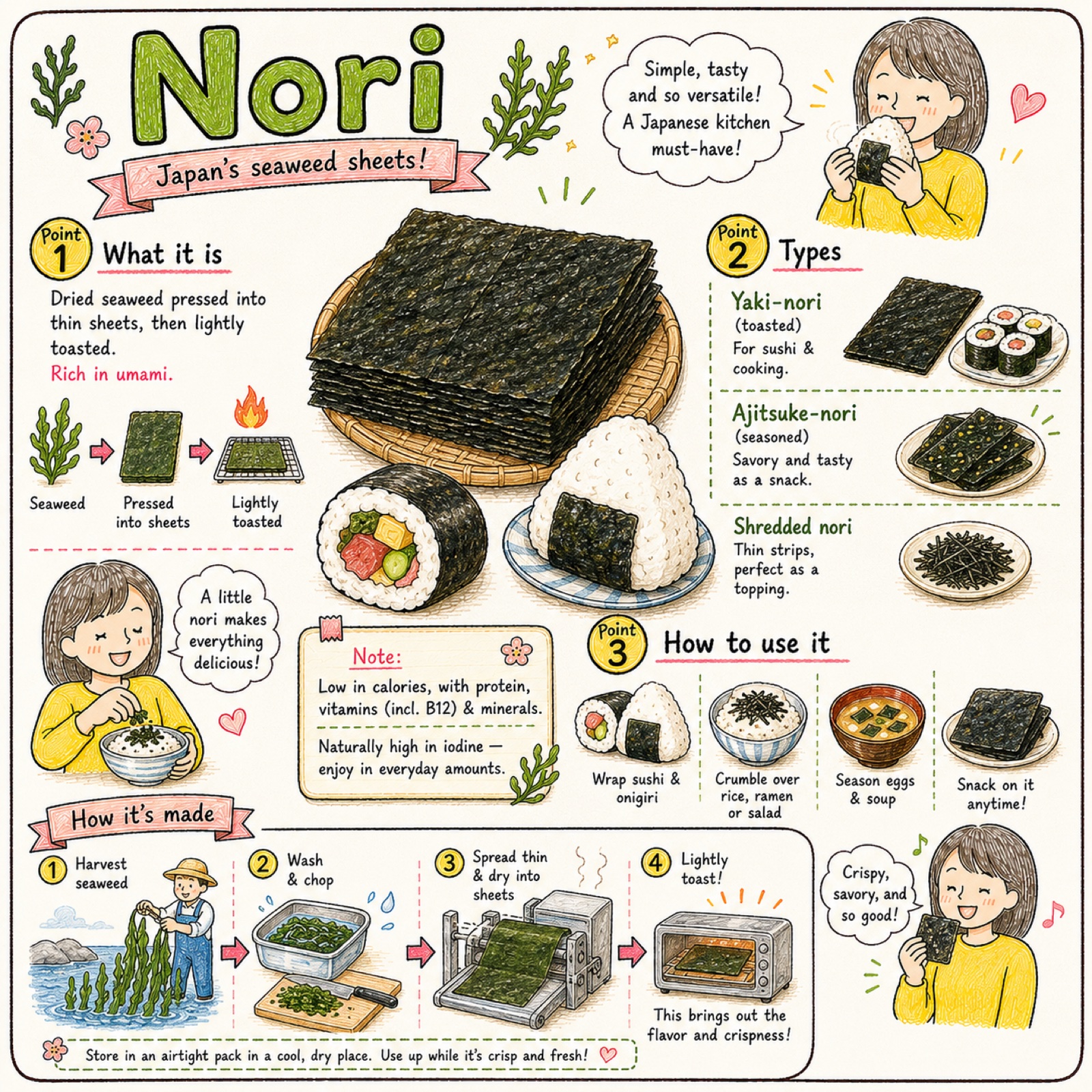
Nori comes in a few forms depending on how it’s finished. Here’s how the common ones compare.
| Type | What it is | Best for |
|---|---|---|
| Yaki-nori (toasted) | Lightly toasted, crisp | Sushi, onigiri, general use |
| Hoshi-nori (plain dried) | Untoasted dried sheets | Cooking; toast before use |
| Ajitsuke-nori (seasoned) | Seasoned with soy & sugar | Snacking, with rice |
| Kizami / furikake | Shredded strips / flakes | Toppings & seasoning |
Sources: Kikkoman glossary (yaki-nori); nutrition references on nori (laver). Iodine and nutrient amounts vary by product.
What Is Nori, and How Is It Made?
Nori is made from an edible seaweed (Pyropia, often called laver). The process is a little like making paper:
- Cultivate and harvest the seaweed from nets in coastal waters.
- Wash and chop it into a fine slurry.
- Spread the slurry thinly onto frames and dry it into flat sheets.
- Many sheets are then lightly toasted (yaki-nori) to make them crisp and to bring out their aroma and umami.
The result is a thin, glossy sheet that’s shelf-stable and ready to use.
How to Use Nori
Nori is endlessly handy — far beyond sushi:
- Wrap sushi and onigiri. The classic use. Toasted nori holds rice rolls and rice balls together and adds a savory, briny note.
- Crumble or shred it as a topping. Tear or snip nori over rice bowls, ramen, salads, and noodles for instant umami.
- Season eggs and soups. A few torn pieces deepen the flavor of miso soup, omelets, or scrambled eggs without any extra salt.
- Snack on it. Lightly salted or seasoned nori (ajitsuke-nori) is a popular, low-calorie snack on its own.
- Use it as a finishing touch. Crumbled nori is delicious on popcorn, roasted vegetables, avocado toast, and pasta.
A handy tip: nori absorbs moisture quickly and goes soft, so add it at the last moment if you want it crisp.
How to Choose and Store Nori
- Pick the right type. Choose yaki-nori (plain toasted) for sushi and cooking, and ajitsuke-nori (seasoned) for snacking.
- Look at the color. Good nori is dark, glossy, and uniform; pale or reddish sheets are usually lower grade.
- Keep it dry. Store nori in an airtight container or resealable bag with a desiccant packet, away from humidity. If it goes soft, a few seconds over low heat will re-crisp it.
Frequently Asked Questions
Is nori good for you?
Nori is very low in calories while providing plant protein, fiber, vitamin A, folate, minerals, and even vitamin B12 — unusual for a plant food. The one thing to keep in mind is iodine: seaweed is naturally high in it, so anyone with a thyroid condition should be mindful of their intake and check with a doctor.
What’s the difference between nori, wakame, and kombu?
They’re all edible seaweeds used differently. Nori is pressed into thin sheets for sushi and snacks; wakame is the soft, leafy seaweed in miso soup and salads; kombu is thick kelp used mainly to make dashi (stock). Kombu and wakame are higher in iodine than nori.
Is nori a good source of vitamin B12 for vegans?
Nori is one of the few plant foods that contains vitamin B12, which is why it interests many vegetarians and vegans. If you rely on a plant-based diet, it’s still best to discuss your overall B12 needs with a healthcare professional.
How do I keep nori crisp?
Nori softens as it absorbs moisture, so keep it sealed with a desiccant and add it to dishes at the last moment. You can re-crisp a soft sheet by passing it briefly over low heat.
Can you eat nori on its own?
Yes — toasted or seasoned nori is a tasty, low-calorie snack straight from the pack, and it’s a popular lunchbox and on-the-go nibble in Japan.
A Little Sheet With a Lot to Offer
Nori proves that the humblest-looking foods can be the most useful. It wraps your sushi, seasons your rice, crisps up as a snack, and slips a dose of sea-vegetable nutrition into almost any savory dish — all from a paper-thin sheet. Keep a pack sealed in the cupboard, tear some over your next bowl of rice, and you’ll see why it’s a staple in every Japanese kitchen.
About the author
KOBUO is the creator of Kobuo’s Japan Guide, sharing authentic Japanese food, traditions, and crafts with curious readers around the world. Every guide is carefully researched and paired with an original hand-drawn illustration. More about Kobuo →