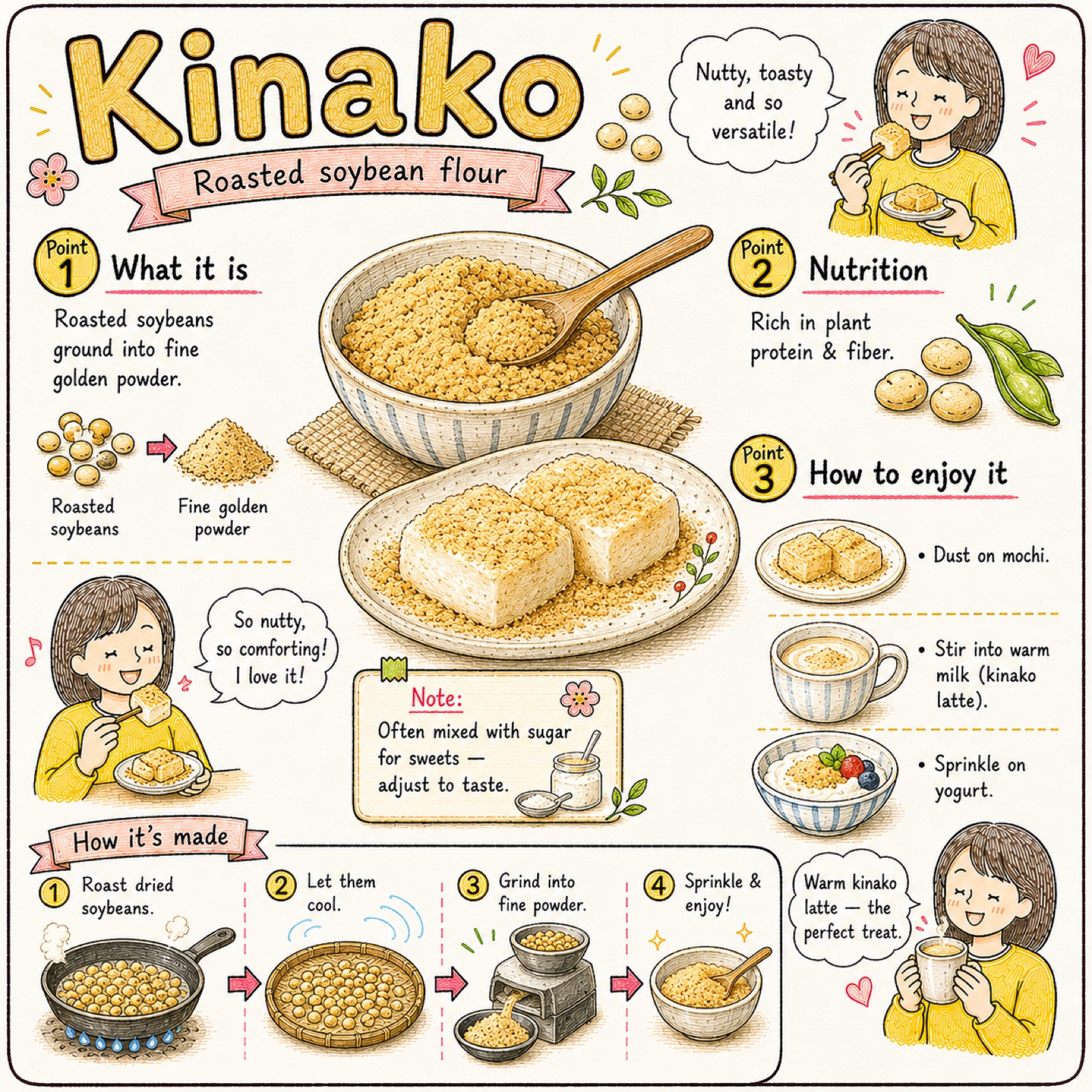
Kinako is the warm, nutty, golden powder dusted over chewy mochi and Japanese sweets — a flavor that tastes a little like toasted nuts and brown sugar at once. It’s simply roasted soybeans ground into a fine flour, which makes it one of the easiest ways to add a hit of plant protein and nutty flavor to almost anything, from a bowl of yogurt to a glass of warm milk. This guide explains what kinako is loved for, the main types, how it’s made, and all the ways to use it.
Why Kinako Is Loved as a Health Food
Kinako has been part of the Japanese pantry for centuries, valued because it packs the goodness of soybeans into a sprinkle.
- A concentrated source of plant protein. Because it’s just ground roasted soybeans, kinako is rich in protein — a couple of spoonfuls add a meaningful amount to a snack or drink.
- Fiber, minerals, and isoflavones. Kinako provides dietary fiber along with B vitamins (including folate), calcium, iron, magnesium, and the soy isoflavones found in other soy foods.
- Naturally gluten-free and easy to add. Kinako is a fine, dry powder you can stir or sprinkle into almost anything, which makes its nutrition genuinely convenient.
One honest note: kinako is a soy food, and very large amounts of soy may affect thyroid function in some people — especially those with a thyroid condition or low iodine intake. Normal amounts are fine for most people, but check with your doctor if that applies to you (or if you have a soy allergy). Also keep in mind that kinako is often served mixed with sugar for sweets, so watch the added sugar if that matters to you. As with any food, enjoy it as part of a balanced diet.
The Types of Kinako
All kinako is roasted, ground soybeans — the differences come from which soybeans are used. Here’s how the common types compare.
| Type | Made from | Color & flavor | Notes |
|---|---|---|---|
| Yellow kinako | Yellow soybeans | Tan/yellow; robust, roasted, nutty | The standard, most common type |
| Uguisu (green) kinako | Green soybeans (aodaizu) | Pale green; milder, subtly sweet | Also called ao-kinako; prized for sweets |
| Black soybean kinako | Black soybeans (kuromame) | Deeper color; rich flavor | Usually a bit more expensive |
Sources: Wikipedia, Just One Cookbook, Japanese Wiki Corpus.
What Is Kinako, and How Is It Made?
Kinako couldn’t be simpler: the name comes from ki (“yellow”) and ko (“powder”), and that’s exactly what it is — yellow soybean powder.
- Roast dried soybeans until they’re fragrant and lightly toasted, which is what removes the raw “beany” taste.
- Cool the roasted beans.
- Grind them into a fine, even powder.
- The result is a dry, nutty flour with a gently sweet, toasted aroma — ready to sprinkle or stir into anything.
That roasting step is the whole secret: it turns plain soybeans into something warm, nutty, and faintly sweet, with no cooking required to use it.
How to Use Kinako
Kinako is wonderfully versatile — traditional and modern uses alike:
- Dust it over mochi and sweets. The classic use. Roll chewy mochi (kinako mochi), cool warabi mochi, or dango dumplings in kinako — often with a little sugar — for a nutty, satisfying treat. It’s also delicious with a drizzle of kuromitsu (Japanese brown-sugar syrup).
- Stir it into milk for a kinako latte. Whisk kinako with warm milk (dairy or soy) and a touch of sweetener for a comforting, malty drink.
- Blend it into smoothies. A heaped spoonful adds nutty flavor and plant protein — kinako and banana is a classic pairing.
- Sprinkle it on breakfast. Dust kinako over yogurt, oatmeal, toast, or ice cream for instant nutty flavor and a nutrition boost.
- Bake with it. Since it’s naturally gluten-free, kinako can stand in for some of the flour in cookies, muffins, and pancakes, lending a toasty, nutty note.
A simple tip: kinako for sweets is usually mixed with a roughly equal amount of sugar and a pinch of salt — but you can adjust the ratio (or skip the sugar entirely) to taste.
How to Choose and Store Kinako
- Pick the type for the flavor. Reach for yellow kinako for the classic, robust roasted flavor; uguisu (green) kinako for a milder, paler, subtly sweet option; and black soybean kinako for a richer taste.
- Buy it plain if you want control. Some products are pre-sweetened; plain (unsweetened) kinako lets you decide how much sugar to add.
- Keep it sealed and cool. Kinako is a fine powder that absorbs moisture and can lose its aroma, so store it in an airtight container away from heat and humidity, and use it within a few months. Refrigerating an opened bag helps keep it fresh.
Frequently Asked Questions
Is kinako good for you?
Kinako is concentrated roasted soybeans, so it’s rich in plant protein and provides fiber, B vitamins, calcium, iron, magnesium, and soy isoflavones. The things to keep in mind are that it’s a soy food (so very large amounts may matter for people with thyroid conditions or soy allergy) and that it’s often mixed with sugar for sweets. In normal amounts, it’s a nutritious, convenient addition to food.
What does kinako taste like?
Kinako has a warm, nutty, toasted flavor with a gentle natural sweetness — a little like toasted nuts. The roasting is what gives it that aroma and removes the raw, beany taste of plain soybeans.
What’s the difference between kinako and soy flour?
Both are made from soybeans, but kinako is made from roasted soybeans, which gives it its nutty flavor and lets you eat it as-is. Plain soy flour is usually made from raw or lightly heated beans and is meant to be cooked. That roasting is why kinako can be sprinkled straight onto food.
Is kinako gluten-free?
Yes — kinako is simply ground soybeans, so it’s naturally gluten-free. It can be used to replace some of the wheat flour in baked goods, though on its own it won’t behave exactly like wheat flour.
How do I store kinako?
Keep it in an airtight container away from heat and humidity, since the fine powder absorbs moisture and slowly loses its aroma. Use it within a few months, and refrigerate an opened bag to keep it fresh longer.
A Sprinkle of Toasted Goodness
Kinako is proof that one simple step — roasting and grinding soybeans — can turn a humble bean into something you’ll want to put on everything. It dusts your mochi, warms your milk, enriches your smoothie, and slips the nutrition of soybeans into a snack with almost no effort. Keep a sealed bag in the cupboard, sprinkle some over your next bowl of yogurt or ice cream, and you’ll understand why this nutty golden powder has been a Japanese favorite for generations.
About the author
KOBUO is the creator of Kobuo’s Japan Guide, sharing authentic Japanese food, traditions, and crafts with curious readers around the world. Every guide is carefully researched and paired with an original hand-drawn illustration. More about Kobuo →